Print
Print E-Mail
Matteo Tonello is the Head of Data Benchmarking and Analytics at The Conference Board, Inc. This post is based on a report developed by The Conference Board in partnership with ESGAUGE, Russell Reynolds Associates, and Rutgers Law School’s Center for Corporate Law and Governance, and authored by Ariane Marchis-Mouren, Senior Researcher, Corporate Governance and Keil Lapore, Program Manager, Corporate Governance at The Conference Board.
The 2026 proxy season was shaped less by volume than by procedural change. Proposal filings continued to decline, the number of activism campaigns fell sharply, and say-on-pay support improved—even as boards faced heightened legal complexity, more fragmented voting influence, and a regulatory environment in flux. This report reviews shareholder voting trends from the first half of the year and considers implications for offseason preparation heading into 2027.
Trusted Insights for What’s Ahead®
- In withdrawing from substantive review under Rule 14a-8, the SEC staff has departed significantly from its traditional gatekeeping role and transformed the mechanics of proposal exclusion. Exclusion decisions that previously relied on SEC staff concurrence now expose companies to the risk of litigation by proponents, which has emerged as a feature of the proxy process. Exclusion request volume fell nearly 50% in the Russell 3000, while the share of requests resulting in an SEC no objection response rose to 90%.
- Shareholder proposal filings continued to decline across most categories, while governance proposals rose nearly 19% in volume. Average support for governance proposals fell to 33% from 38% in 2025 as investors grew more selective and a single proponent accounted for 70% of filings.
- Human capital management proposals fell nearly 60% from 2024, and average support declined to 6%. The results point to a materially weaker institutional support base for broad DEI, pay equity, and racial equity proposals, even as narrower, company-specific workforce requests continue to attract selective investor interest.
- Proposals filed by anti-ESG groups remained broadly stable, but investor support nearly doubled. The increase in average support to 5% was driven largely by CEO/chair separation proposals put forward by the National Legal and Policy Center (NLPC); excluding those items, average support was just under 2%, indicating that direct challenges to corporate ESG, DEI, and climate policies continued to attract little investor backing.
- Say-on-pay outcomes improved across the Russell 3000, with 76% of proposals receiving 90% or higher approval, up from 72% in 2024 and 2025. Failed votes declined for the second consecutive year, consistent with stronger pay outcomes at many companies, although nearly one-fifth remained in the “watch list” 70–90% support range.
- Director support remained high, reaching an average of 95% in the Russell 3000, while the number of directors receiving less than 70% of votes cast fell 24% over two years. Nominating and governance committee chairs continued to attract the lowest average support among committee chair roles.
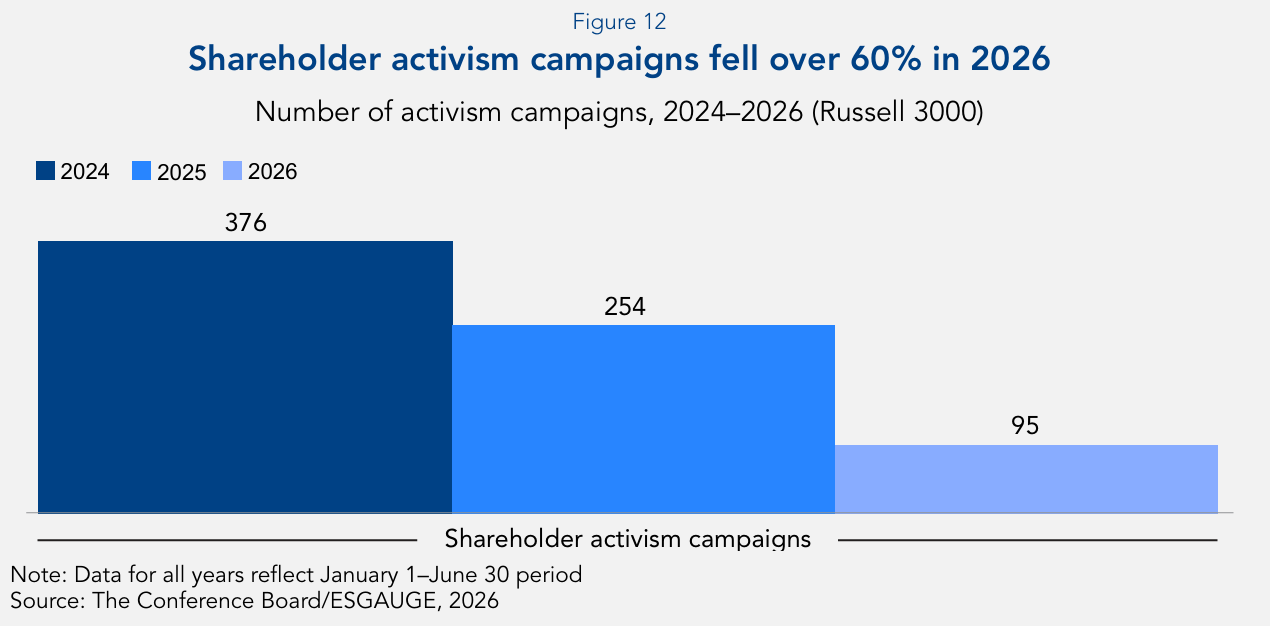
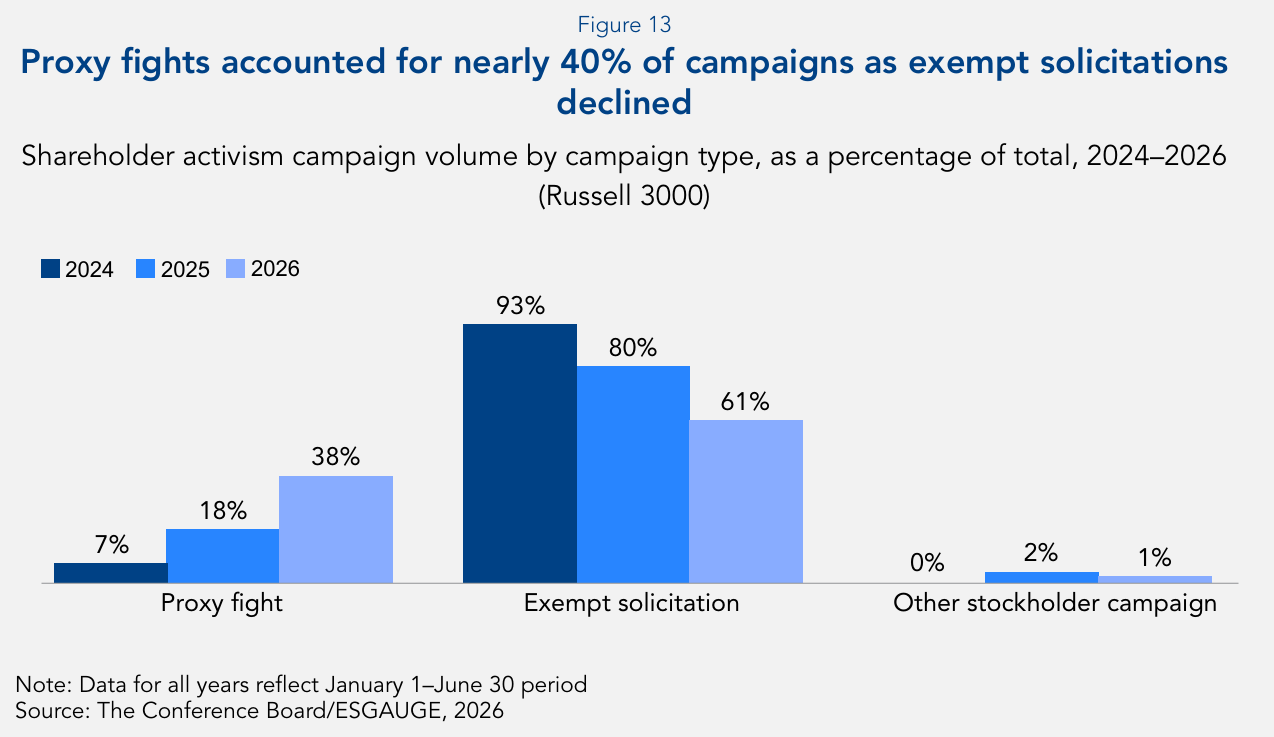
- Shareholder activism campaigns declined by nearly 75% in the Russell 3000 from the 2024 peak, while the share of campaigns directed toward proxy fights rose from 7% in 2024 to 38% in 2026—suggesting a more targeted and selective approach by activists.
A season shaped by regulatory withdrawal and evolving investor influence
The 2026 proxy season unfolded amid a significant change in the SEC’s role under Rule 14a-8. In November 2025, the Division of Corporation Finance announced that it would no longer provide substantive staff review for most shareholder proposal exclusion requests. Except for requests based on the “improper under state law” exclusion, companies would instead receive a no-objection response upon representing that they had a reasonable basis for exclusion. Unlike traditional no-action relief, these responses generally did not reflect staff review of the merits. This marked a significant departure from the staff’s historical gatekeeping role and altered the practical mechanics of proposal exclusion, negotiation, and dispute resolution.
In a public address in July 2026, the SEC chair defended the revised process, noting that six lawsuits were filed over excluded proposals—representing less than 4% of proposals for which companies submitted exclusion notices—and that adverse proxy advisor recommendations “were virtually nonexistent.” The chair described the prior no-action process as “tedious, and evidently ineffectual,” suggesting that the current approach may continue while the SEC considers more fundamental changes to Rule 14a-8, including its relationship to state corporate law.
At the same time, the proxy voting ecosystem continued to evolve as the largest asset managers reorganized stewardship functions, expanded investor voting choice programs, and reduced reliance on standardized proxy advisory guidelines. Proxy advisors remained influential, but their recommendations became less determinative as investors placed greater weight on internal analysis and company-specific context. Taken together, these developments reinforced a proxy environment in which issuers and proponents bear greater responsibility for managing proposal risk—and in which a clear, well-documented rationale for governance decisions has become more important than ever.
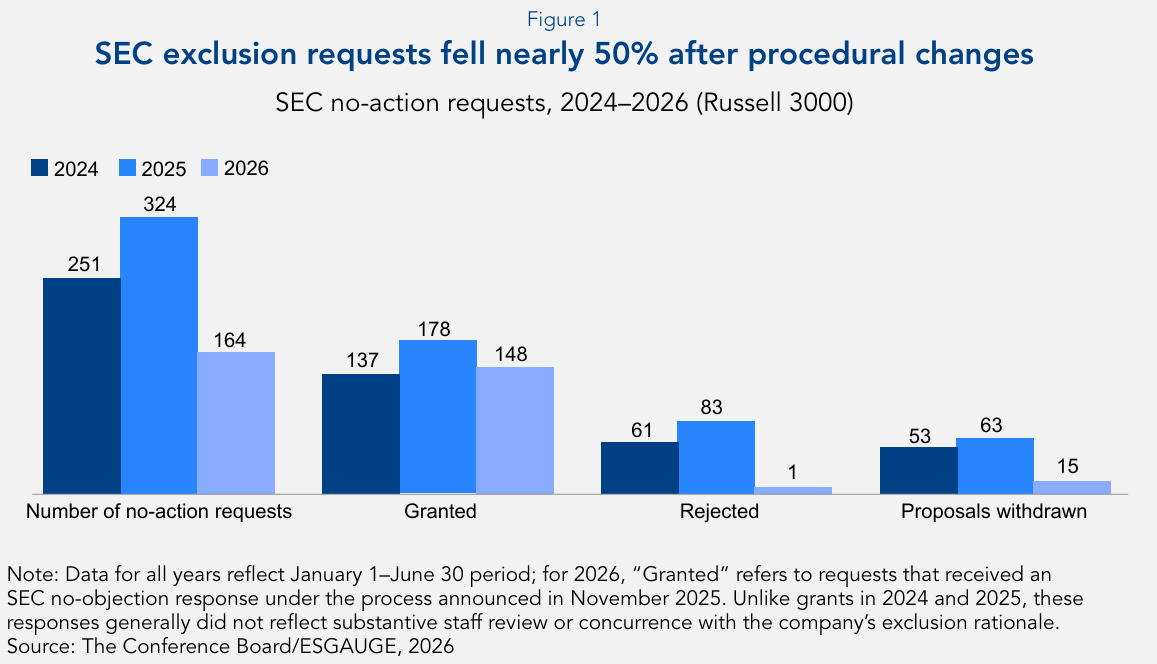
The decline in Rule 14a-8 exclusion requests partly reflected the lower volume of shareholder proposals filed. Proposal filings fell approximately 20% from 2025 to 2026, while exclusion requests declined nearly 50%. As a result, exclusion requests decreased both in absolute terms and as a share of proposals filed, from approximately 42% in 2025 to 26% in 2026. The 2026 rate was broadly consistent with the 27% recorded in 2024, suggesting that the decline also reflected a return from the unusually high use of the exclusion process in 2025.
Companies should treat the SEC staff’s withdrawal from substantive review for most Rule 14a-8 exclusion requests as a structural change rather than a temporary policy shift. Exclusion decisions that previously relied on SEC staff concurrence now more directly expose companies to litigation risk and, in some cases, withhold campaigns against responsible directors. Boards and governance teams should ground any decision to omit a proposal in clear legal precedent and documented reasoning, and they should engage with proponents before exclusion becomes necessary.
Shareholder Proposals
Following a further decline from the 2024 peak, the 2026 proxy season saw a continued reduction in shareholder proposal volume across most categories. Across the Russell 3000, 622 shareholder proposals were tracked for the January 1–June 30 period, with governance proposals accounting for a growing share of the total. Of proposals that went to a vote, average support stood at 24%, and 30 proposals received majority support.
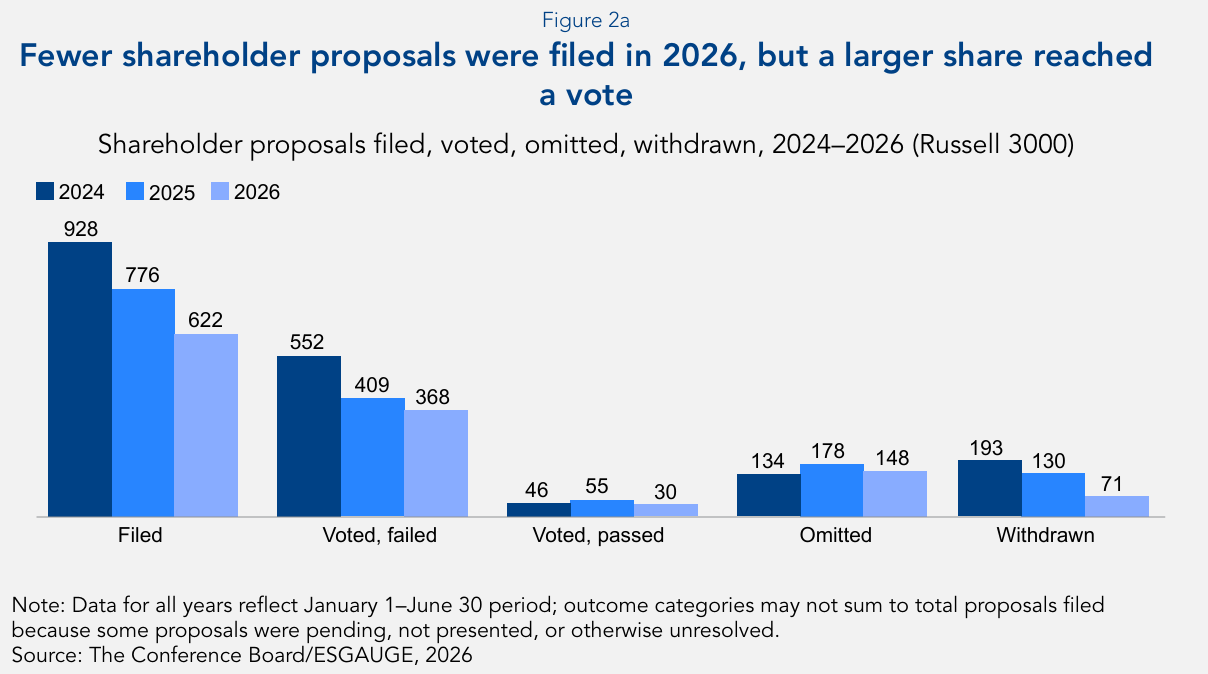
The decline in overall filings, however, did not translate into a proportional reduction in proposals reaching a vote. For most exclusions, the traditional no-action process was replaced by a no-objection process that did not involve substantive staff review. The resulting uncertainty may have encouraged some companies to take a more cautious approach to exclusion and to include proposals rather than risk litigation. Of 622 proposals filed in the Russell 3000, 398 (64%) went to a vote, slightly higher than the 60% that went to a vote in 2025, but broadly consistent with the 64% recorded in 2024; 71 proposals were withdrawn (11% of total filings), down from 17% in 2025 and 21% in 2024. The lower withdrawal rate contributed to a larger share of proposals remaining on the ballot.
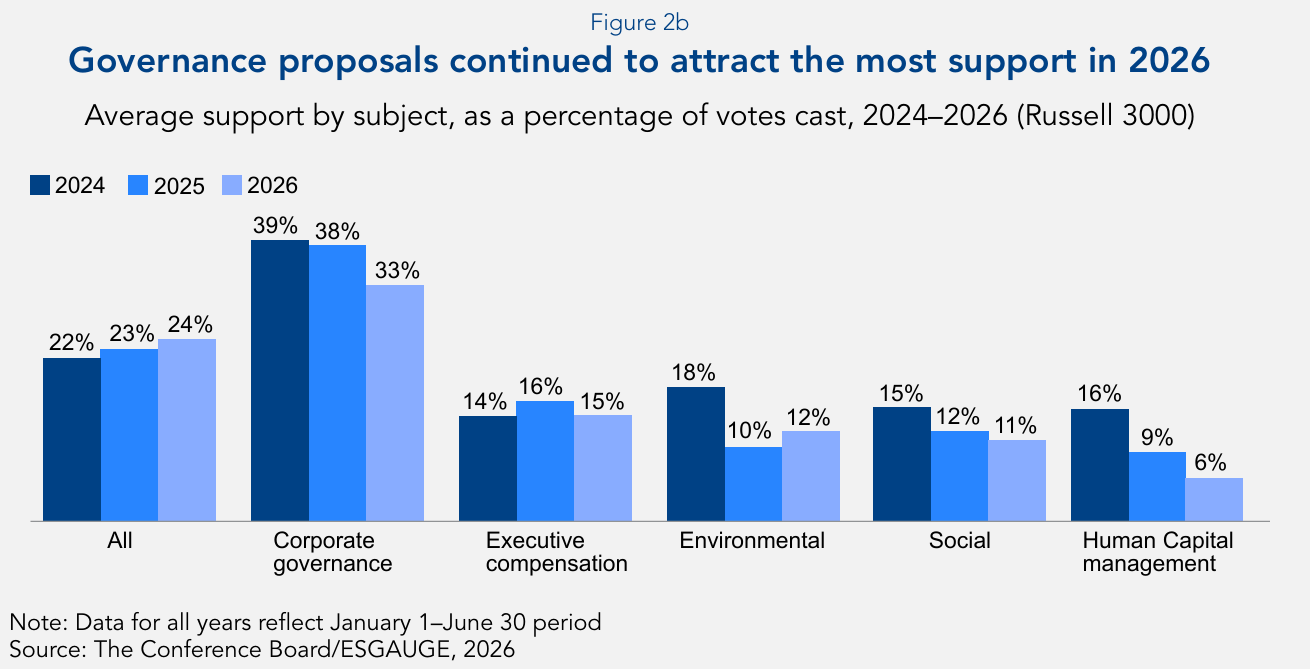
The composition of the proposal landscape shifted markedly. Governance proposals rose nearly 19% in volume from the prior year, accounting for nearly half of all filings, while environmental, social, and human capital management proposals each declined further. Average support continued to vary meaningfully by category: governance proposals attracted the highest average support (albeit lower than in previous years), while human capital management proposals received the lowest support at just 6%. More broadly, ballot-level support for many environmental, social, and human capital management proposals has weakened materially, even as more targeted, company-specific requests continue to attract selective investor backing.
Lower ballot volume should not be interpreted as lower governance pressure. In 2026, companies shared that governance pressure arrived through private engagement, withhold campaigns, and settlement negotiations before proposals reached the ballot—reinforcing the importance of year-round investor monitoring and proactive disclosure practices, not just preparation for the formal proxy season.
Governance proposals
Governance proposals were the defining feature of the 2026 season, rising nearly 19% in volume from 257 in 2025 to 305, even as average support fell to 33% from 38% the prior year. Only 27 governance proposals (12% of those voted) received majority support, compared to 55 (30%) in 2025.
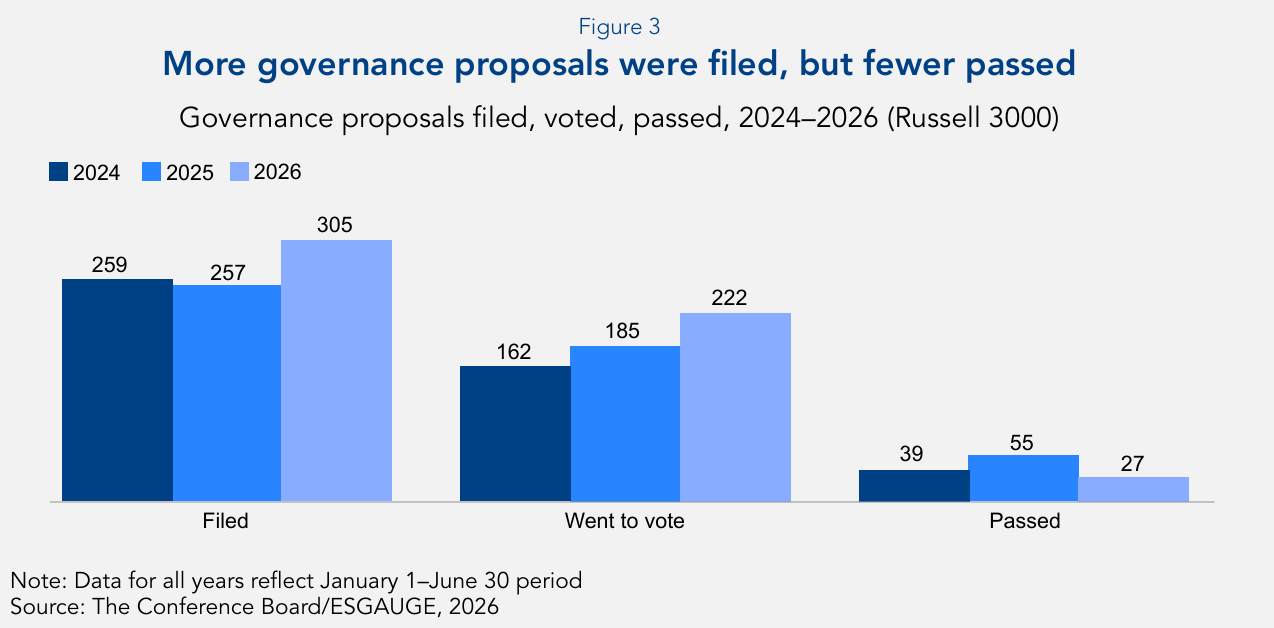
The dominant proponent was, as in prior years, individual shareholder John Chevedden, who accounted for approximately 70% of governance proposals. His most frequently submitted topics—independent board chair (71 voted), special meeting call rights (48), and right to act by written consent (38)—drove the volume surge. Notably, many of his proposals were omitted by companies citing the word “enduring” in his standard chair/CEO separation language as a basis for exclusion.
Despite the volume increase, most governance proposals that went to a vote did not receive majority support. Independent board chair proposals received average support of 24%. Proposals to allow shareholders to call special meetings averaged 40%—a recovery from 33%in 2025 and back in line with the 41% recorded in 2024—with five passing. The notable exceptions were board declassification (82% average support, all eight proposals passing), proposals to eliminate supermajority voting requirements (56%, seven of 14 passing), and proposals to shift director elections from plurality to majority voting (68%, both proposals passing)—together reflecting investors’ continued appetite for structural protections and director accountability mechanisms, even as support for prescriptive mandates on board structure or composition continues to erode.
The surge in written consent proposals—quadrupling with 51 filed and 38 going to a vote in 2026, up from just 11 filed and 10 voted in 2025—is a development that warrants board attention. With average support above 36%, companies that have consistently opposed such provisions without proactive engagement risk increasing vote pressure heading into 2027. Boards should review their shareholder rights profile and engage their largest shareholders on structural rights before proposals are filed.
Social proposals
Social proposals continued their multiyear contraction in 2026, with 141 filings—down 33% from 209 in 2025 and 47% from 266 in 2024. No social proposal received majority support for a second year in a row, and average support among the 75 voted proposals was 11%, slightly below the 12% recorded in 2025. Political spending and lobbying disclosure proposals remained the best-supported social topics, averaging 28% for contributions proposals and 22% for lobbying proposals. AI accountability proposals averaged 6% support across eight voted proposals, consistent with prior years and signaling continued proponent interest in board level AI governance even as mainstream investor uptake remains limited. The share of social proposals filed by anti-ESG proponents continued to grow and is discussed separately below.
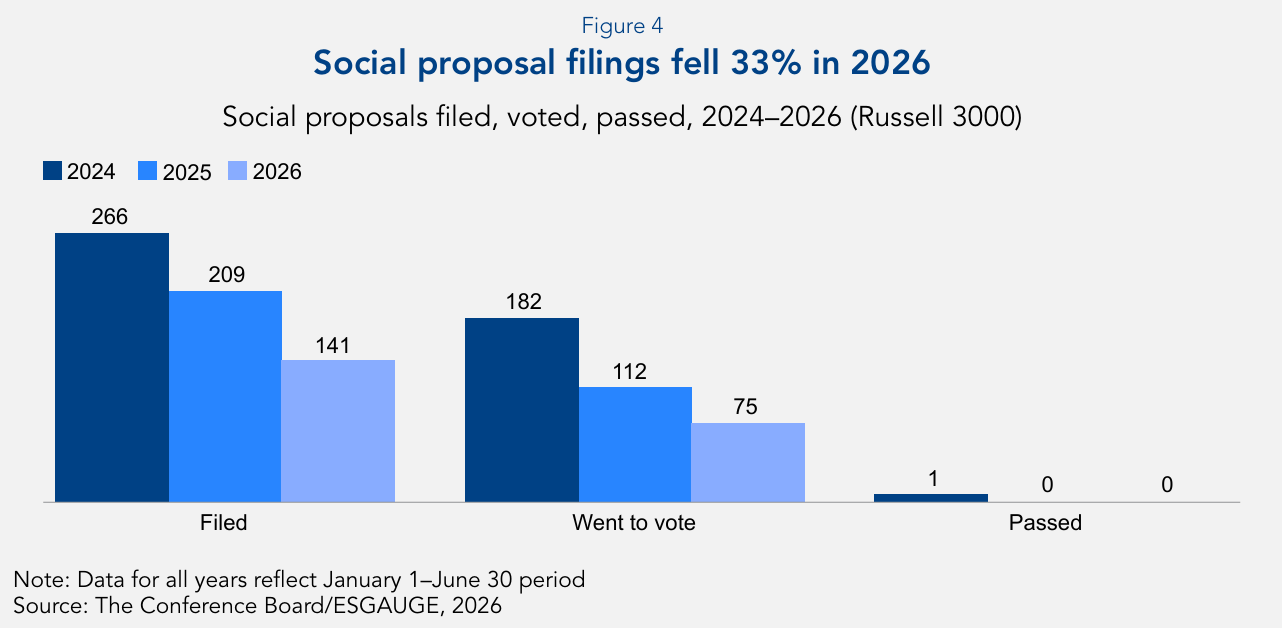
The continued decline in social proposal volume does not necessarily indicate diminished investor attention to social issues. Investors may also address political spending, AI governance, and human rights risks through direct engagement and other stewardship channels. Companies should use the offseason to clarify their approach to these issues and engage shareholders before the next filing season.
Environmental proposals
Environmental proposals declined to 75 filed in 2026, down 50% from 150 in 2024, and none received majority support. Average support among the 41 voted proposals was 12%, a slight recovery from 10% in 2025 but well below the 18% recorded in 2024. Climate-related proposals remained the most-filed topic, with 24 voted proposals averaging 14% support. Plastic pollution proposals (eight voted, averaging 8% support) and other environmental reporting proposals (nine, 11%) rounded out the category.
The continued decline in volume may reflect several factors. More developed corporate climate disclosure has absorbed many of the reporting requests that once drove filings, reducingthe incremental value of broad or duplicative resolutions. Major asset managers’ stewardship policies now place greater weight on financial materiality, long-term shareholder returns, and company-specific circumstances than on prescriptive environmental mandates. Political and legal uncertainty has added further friction: the SEC proposed rescinding its climate-disclosure rules in May 2026, while multistate litigation and other state actions have continued to test climate-related coordination by financial institutions. Together, these developments may be lowering the expected payoff from broad environmental proposals and encouraging proponents to pursue narrower, company-specific requests or private engagement.
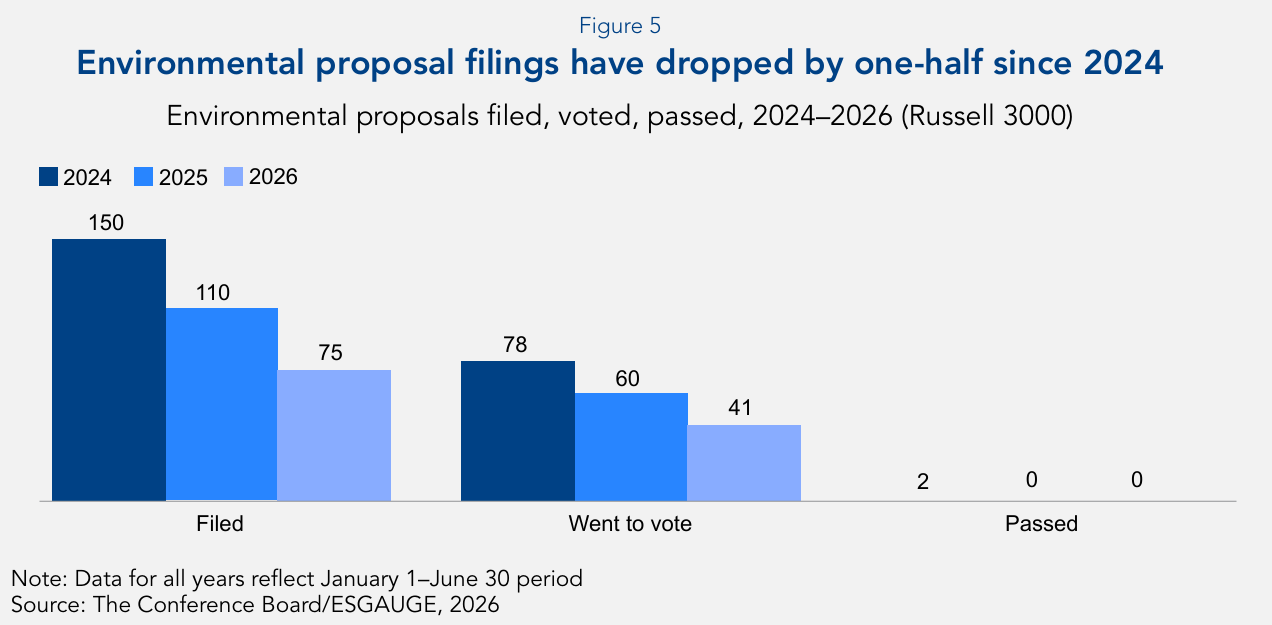
As environmental proposal volume declines, the proposals that remain tend to be more targeted and company specific, drawing greater scrutiny as a result. Companies may wish to use offseason engagement to explain their approach to climate-risk oversight, sustainability strategy, and any material changes to environmental disclosures or targets.
Human capital management proposals
Human capital management proposals experienced a steep decline, with 54 proposals filed—down 58% from 129 in 2024 and 37% from 86 in 2025. Average support fell to just 6% among the 31 voted proposals, the lowest in the period reviewed, with no proposals receiving majority support. The contraction may reflect more than investor fatigue with prescriptive or duplicative diversity and pay equity proposals and more than proponent restraint in the face of consistently low vote outcomes. The institutional coalition that previously supported many DEI, pay equity, and racial equity proposals has weakened amid intensified legal and political scrutiny. Federal agencies have emphasized potential Title VII risks, while major asset managers have narrowed support to requests tied to financial materiality, company-specific risk, and incremental disclosure.
Workplace diversity proposals remained the most frequently filed human capital management topic, with 13 voted proposals averaging 4% support. Notably, EEO-1 data disclosure proposals averaged 25% support, with many targeting S&P 500 companies that had previously disclosed at least some EEO-1 data but later reduced or discontinued that reporting. Worker rights proposals attracted 27% average support, suggesting that select, company-specific human capital management proposals with clear materiality continue to resonate with investors even as the broader category contracts.
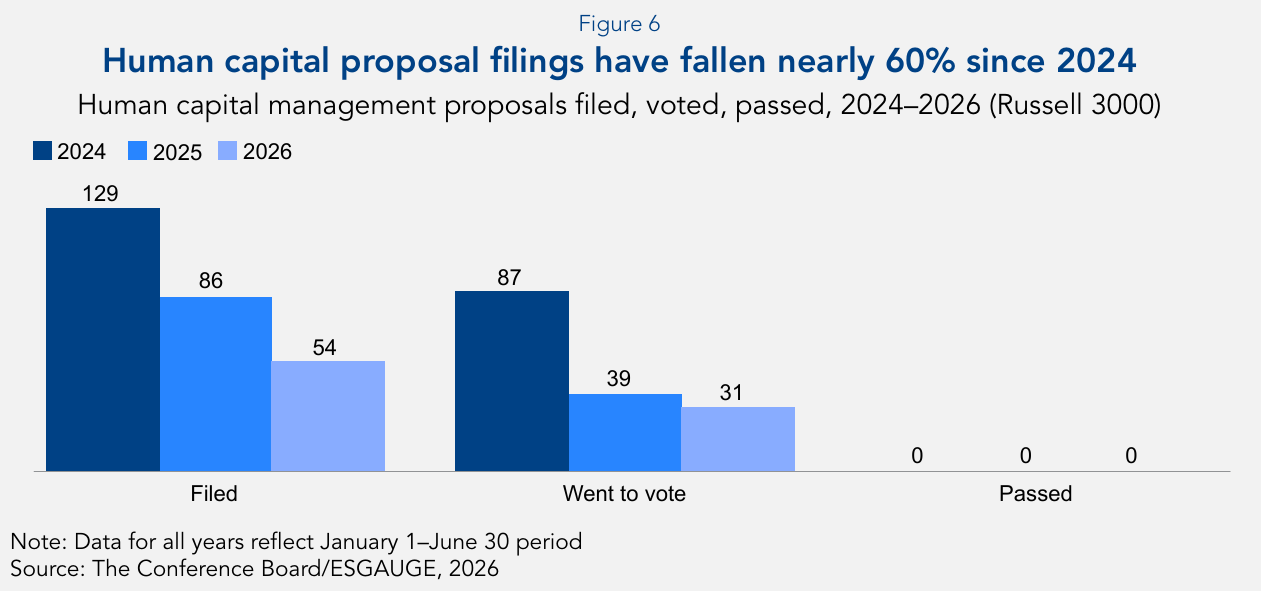
As legal challenges to DEI programs persist and investor selectivity increases, companies should not interpret lower proposal volume as evidence that human capital issues have receded from investors’ agendas. Meaningful minority support for targeted EEO-1 disclosure and worker-rights proposals indicates that investor attention has narrowed rather than disappeared. The proposals that do reach a vote may face closer scrutiny where the request is clearly linked to material business concerns.
Executive compensation proposals
Shareholder-submitted executive compensation proposals fell sharply in 2026, with just 22 filed —down from 68 in 2025 and 75 in 2024. Of the 14 proposals that went to a vote, one received majority support. Average support was 15%, broadly consistent with the 16% recorded in 2025. The most common topics were severance limitations (seven proposals) and linking compensation to ESG performance (seven proposals, of which six were filed by anti-ESG proponents). The sharp volume may reflect both greater proponent selectivity and the continued use of say-on-pay as a more direct mechanism for expressing concerns about compensation practices.
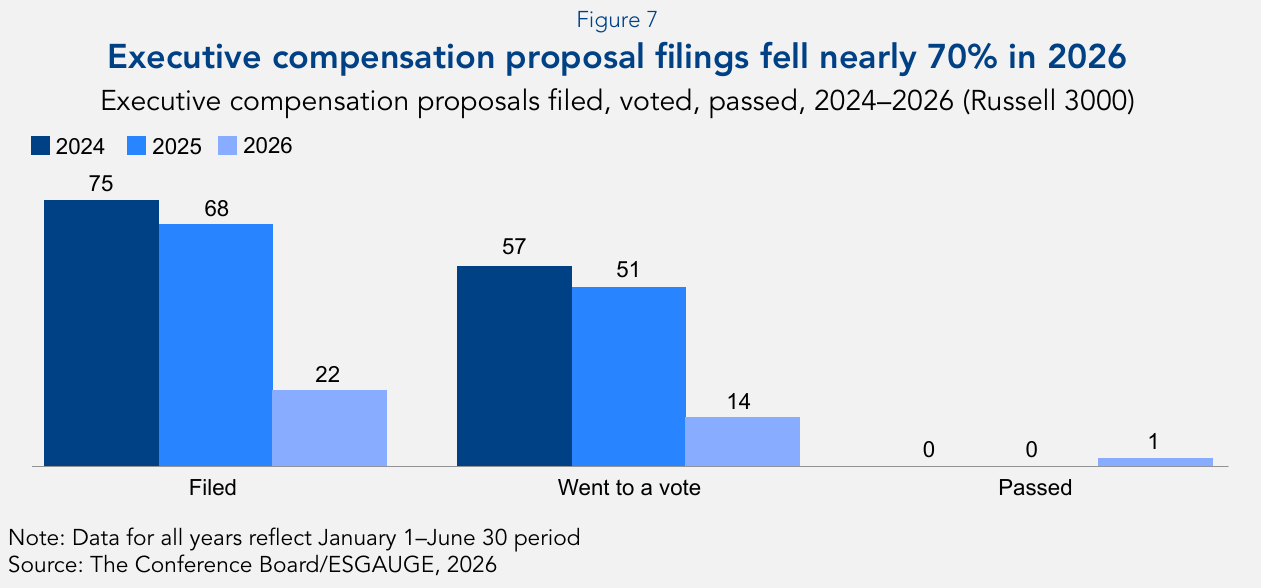
The decline in shareholder-submitted executive compensation proposals may indicate that investors are relying more heavily on say-on-pay votes and direct engagement to express concerns about pay practices. Companies receiving below-average say-on-pay support should view the result as a signal for further engagement, particularly where shareholders have raised concerns about severance arrangements, clawbacks, discretionary awards, or the use of ESG-linked performance measures.
Proposals filed by anti-ESG groups
For consistency with prior-year benchmarking, this report classifies proposals in this section by proponent rather than subject. The category therefore includes all proposals filed by groups whose broader agendas generally challenge corporate ESG, DEI, charitable-giving, or climate policies—even when the ballot item itself may address a conventional governance issue.
Anti-ESG groups files 102 proposals in 2026, broadly consistent with 111 in 2025 and 108 in 2024. As in prior years, no anti-ESG proposal received majority support. Average support increased to 4.7% across 80 voted proposals, which appears elevated relative to prior years (2.5% in 2025, 2.4% in 2024), but this figure is substantially distorted by a shift in proposal topics. Excluding CEO/chair separation proposals, average support for all other anti-ESG proposals was just 1.7%.
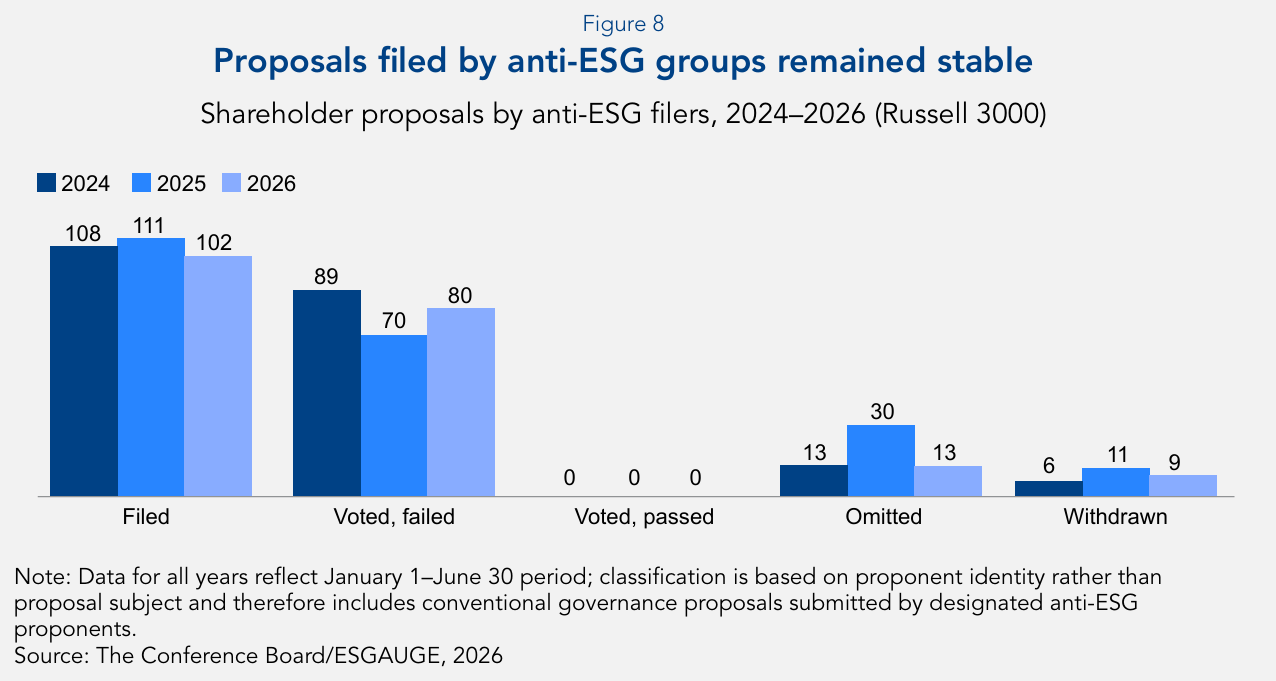
One notable development in 2026 was the National Legal and Policy Center’s expanded use of independent board chair proposals. The conservative nonprofit group filed 13 such proposals—targeting Wells Fargo, Starbucks, PepsiCo, Chevron, Bank of America, General Motors, McDonald’s, Exxon, and others—up from just one (Comcast) in 2025 and three in 2024 (Salesforce, Goldman Sachs, and Coca-Cola). These proposals averaged 20% support, with Wells Fargo receiving the highest support of any proposal from an anti-ESG group in the three-year period at nearly 34%. Although CEO/chair separation is a conventional governance issue, these proposals can also provide a vehicle for challenging the incumbent CEO’s performance or strategic direction, including positions on climate, DEI, and other contested corporate policies. Their comparatively higher support may reflect the underlying governance question more than investor alignment with the proponent’s broader policy agenda.
The omission rate for proposals from anti-ESG groups fell sharply from 27% in 2025 to 12.7% in 2026—returning to levels comparable to the 12% recorded in 2024. The elevated omission rate in 2025 coincided with increased company use of the no-action process following the issuance of Staff Legal Bulletin No. 14M, which rescinded previous guidance and restored earlier staff approaches to the ordinary-business and economic-relevance exclusions. In 2026, the SEC staff stopped providing substantive views on most exclusion grounds, changing how companies evaluated omission decisions.
Human capital management anti-ESG proposals continued to lose traction, averaging just 0.9% support in 2026, the lowest level in the three-year period, while environmental anti-ESG proposals increased in volume to 21 but averaged only 1.3% support. Starbucks, Walt Disney, Alphabet, Apple, and Visa were the most targeted companies, each receiving four or more proposals.
The growing use of conventional governance topics (including CEO/chair separation and cumulative voting) by historically anti-ESG proponents complicates how voting results should be interpreted. A proposal requesting CEO/chair separation may attract support from investors focused on board accountability, even when the sponsor also uses it to criticize the CEO’s broader strategy. Boards at combined CEO/chair companies should address the proposal’s governance merits directly, explaining why their leadership structure serves shareholders rather than relying on the proponent’s identity or motivation as the principal argument against it.
Independent-chair proposals: similar request, different uses
Independent-chair proposals were unusually prominent in 2026, driven by filings from both traditional governance proponents and groups more commonly associated with anti-ESG campaigns. Their rise illustrates how the same governance mechanism can serve different strategic purposes. Although these proposals remain classified by proponent for benchmarking purposes, their voting results should be interpreted in light of the underlying governance request as well as the filer’s broader agenda.
John Chevedden and the NLPC advanced similar independent-chair proposals but for different purposes. Chevedden’s filings reflected a long-standing structural preference for an independent chair, while the NLPC sometimes framed the same governance request within a broader critique of leadership accountability or the company’s strategic direction. Higher support may therefore reflect investor views on board independence rather than endorsement of proponents’ broader agenda.
Artificial intelligence (AI) proposals
AI-related shareholder proposals continued to grow in 2026, with 24 proposals filed, up from 18 in 2025 and 19 in 2024. Of these, 15 (63%) proceeded to shareholder vote, while five (21%) were withdrawn and four (16%) were omitted.
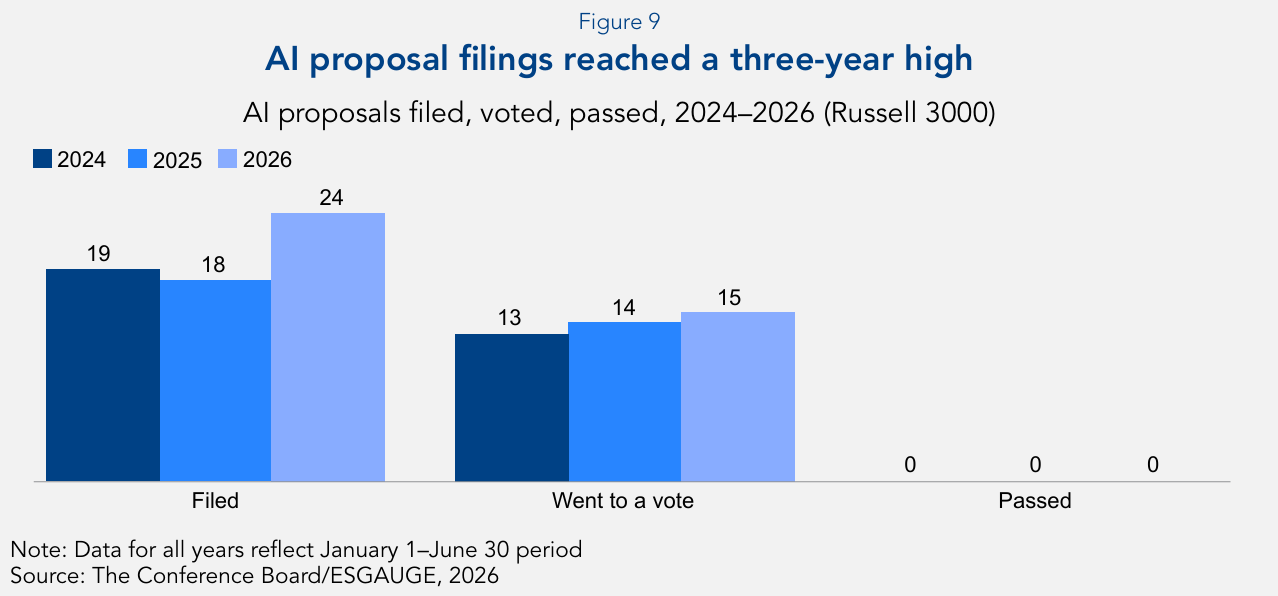
Large technology companies accounted for nearly half of all AI-related filings, reflecting their central role in AI development and deployment. Environmental issues and board oversight emerged as the dominant themes, with seven proposals addressing AI’s environmental footprint—including data center energy demand, water usage, and climate commitments—and six proposals seeking enhanced board or committee oversight of AI risks.
Other recurring topics included data security, workforce impacts, military and dual-use applications, misinformation, and bias. Labor-affiliated organizations and conservative public policy groups were the most active proponents. Although no AI-related proposal passed, investors showed greater support for proposals focused on the operational consequences of AI adoption than for those centered on governance frameworks. Proposals addressing AI’s effects on water use, energy demand, climate commitments, and data practices received 10% to 22% average support, while proposals seeking new oversight structures or broader responsible AI governance generally received 0% to 4% support or were withdrawn or omitted before reaching a vote.
As AI adoption continues to accelerate, shareholder scrutiny is expanding beyond responsible AI principles to encompass the broader implications of AI deployment. Companies should be prepared to address investor questions around AI’s environmental footprint, data governance, board oversight, and workforce impacts, as these issues are likely to remain central to shareholder engagement during the 2027 proxy season.
Management Proposals
Say-on-pay
Say-on-pay outcomes improved in 2026, with 76% of Russell 3000 companies receiving 90% or higher approval—up from 72% in both 2025 and 2024. Of 2,179 say-on-pay proposals voted across the Russell 3000, 410 (18.8%) fell in the 70–90% range, and just 19 (0.9%) failed—down from 25 (1.1%) in 2025 and 27 (1.2%) in 2024. Across the S&P 500, 323 of 436 proposals (74%) received over 90% support, with five failed votes (1.1%).
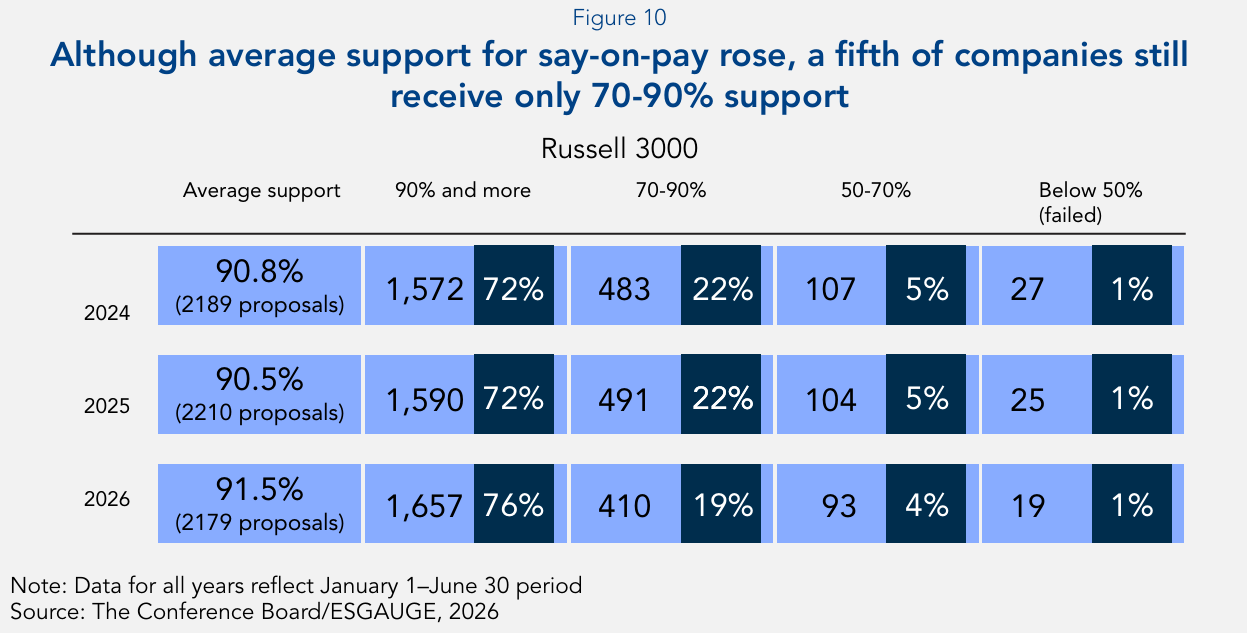
These headline improvements coexist with persistent pockets of investor concern. Companies with weak pay-for-performance alignment, one-off equity awards, or insufficient disclosure continued to face lower support even when proposals technically passed. The 70–90% support range encompasses nearly a fifth of Russell 3000 companies—a persistent “watch list” zone that signals ongoing investor scrutiny of pay practices even absent an outright failure.
Companies receiving between 70% and 90% say-on-pay support should not interpret the result as an unqualified endorsement. This support range should be treated as a signal for proactive outreach to top shareholders before the next season, with a specific focus on explaining the compensation committee’s rationale for any above-median awards, discretionary adjustments, or changes to performance metrics.
Director elections
Directors continued to receive strong support in 2026, with support for Russell 3000 nominees averaging just over 95% of votes cast—consistent with 2025 and up from 94.5% in 2024. The number of directors receiving less than 70% of votes cast fell to 255, down from 261 in 2025 and 337 in 2024—a decline of 24.3% over two years. Directors receiving less than 50% of votes fell to 50, from 57 in 2025 and 64 in 2024. In the S&P 500, nominees averaged 96.3%, with 23 directors falling below 70% and 6 below 50%.
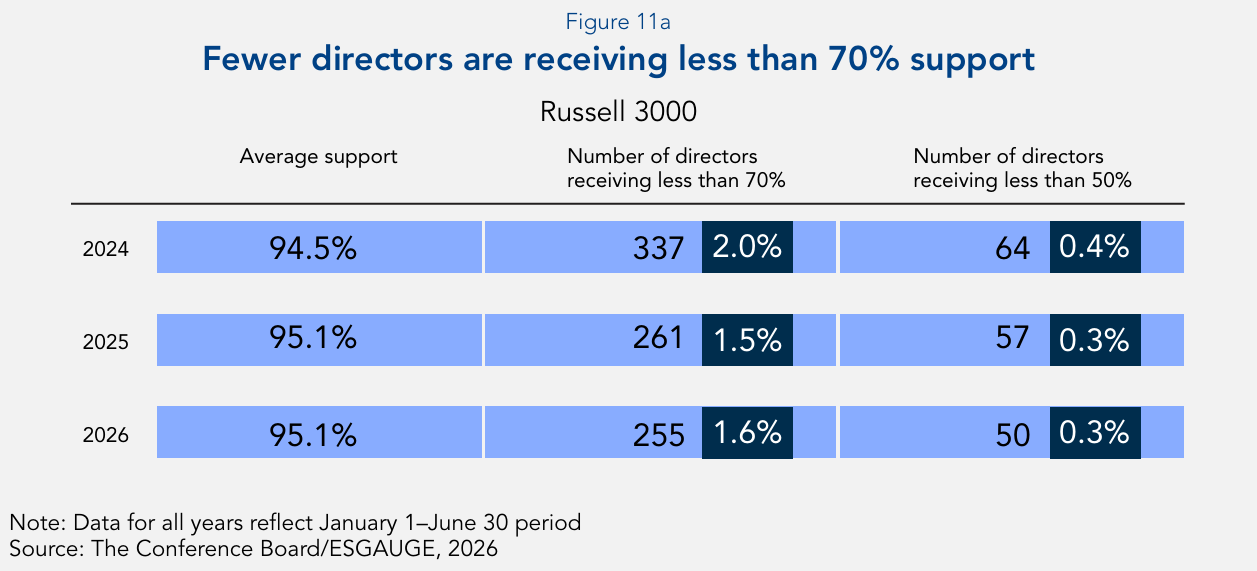
Support across committee chair roles revealed a consistent and meaningful hierarchy. Support for audit committee chairs in the Russell 3000 averaged over 95%—the highest among the three committee types—with 30 falling below 70%. Compensation committee chair support averaged 93.8%, with 37 below 70%. Nominating and governance committee chairs recorded the lowest average support at 90.9%, with 52 below the 70% threshold—reflecting investors’ heightened focus on board composition, refreshment, and accountability. This pattern is consistent across multiple years and reinforces that committee-level votes serve as targeted instruments for investor dissent even when overall director support remains high.
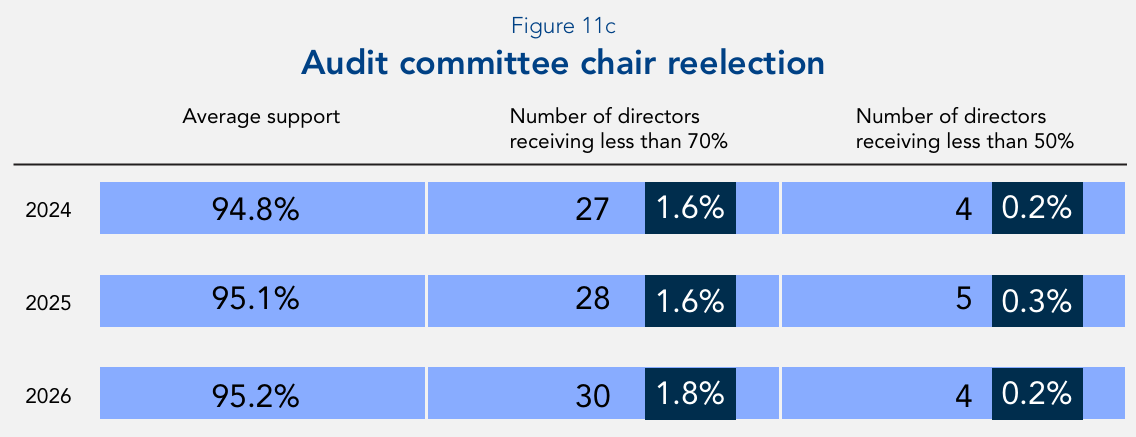
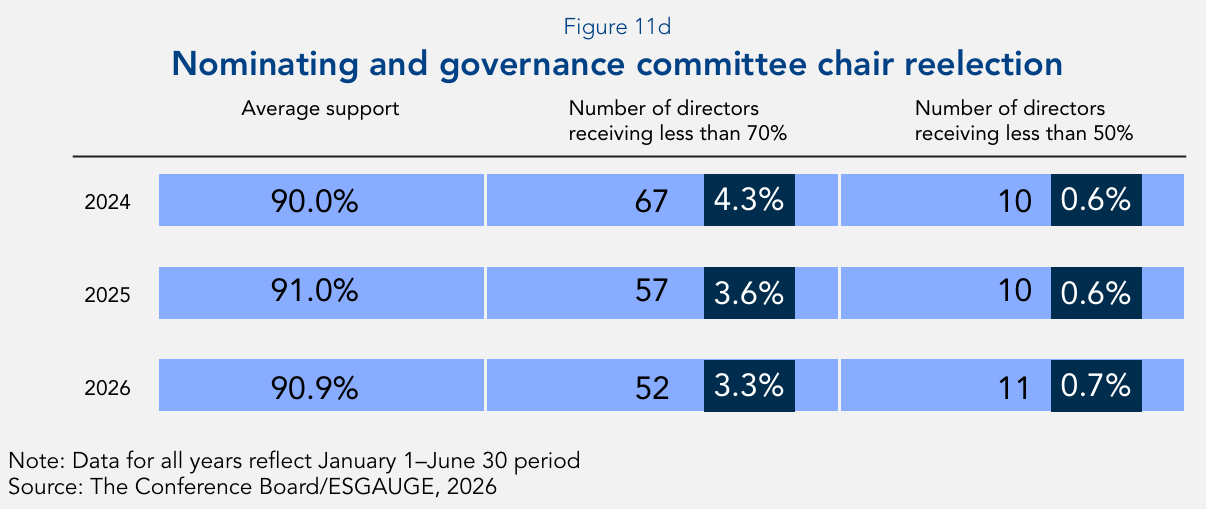
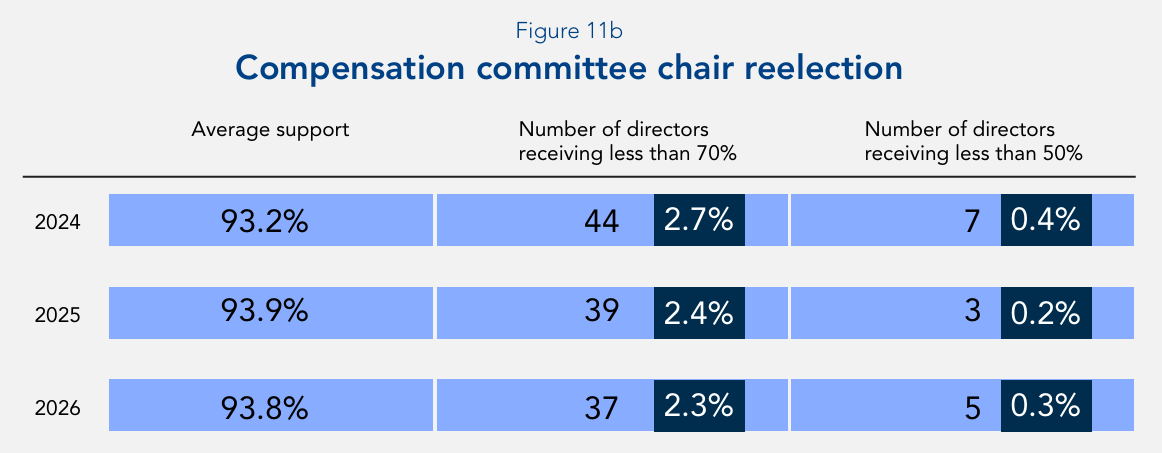
The consistent underperformance of support for nominating and governance committee chairs signals that investors are using these votes to register concerns about board composition and oversight practices—not necessarily the individual director. Boards should use the proxy statement to clearly articulate the governance committee’s approach to refreshment, tenure management, and director qualifications, providing investors with the context they need to distinguish between structural concerns and individual performance.
Shareholder Activism
Campaign volume
Shareholder activism campaigns directed at Russell 3000 companies declined sharply in 2026. Some 95 campaigns were launched in the January 1–June 30 period, down from 254 in 2025 and a peak of 376 in 2024, representing a decline of 75% over two years. S&P 500 campaigns fell to 48 from 171 in 2025 and 296 in 2024. The decline may reflect a combination of factors, including greater caution around Schedule 13G eligibility following the SEC’s February 2025 guidance, a more challenging environment for activist financing, and the continued maturation of the universal proxy landscape. At the same time, lower formal campaign volume does not necessarily indicate a comparable decline in activist pressure, as more activity may be shifting toward private engagement, negotiated settlements, transaction-focused demands, and other forms of escalation that do not culminate in a full public campaign.
Exempt solicitations fell from 93% of all campaigns in 2024 to 61% in 2026. The decline in exempt solicitation use reflects a broader shift in how shareholders are approaching escalation: exempt solicitations have functioned in practice as a low-cost signaling tool—allowing shareholders to communicate views on contested matters without triggering the full requirements of a proxy solicitation—but their use has always been sensitive to procedural constraints and regulatory attention. January 2026 staff guidance went further, announcing that the staff will object to voluntary submissions of Notices of Exempt Solicitation by shareholders below the $5 million ownership threshold, limiting the use of those notices as a voluntary public-signaling mechanism. While the guidance likely accelerated the decline in voluntary exempt solicitations, the more decisive drivers appear to be the sharp contraction in overall activism volume and the shift toward higher-stakes proxy fights.
Proxy contests
Proxy contests in the Russell 3000 totaled 36 in 2026, compared to 46 in 2025 and 26 in 2024. While absolute numbers declined year over year, contests now represent nearly 38% of all Russell 3000 activism campaigns—a notable increase from 18% in 2025 and 7% in 2024—suggesting a continued shift toward higher-stakes, board-level engagements.
Only two of the 36 contests targeted S&P 500 companies, compared to 13 in 2025, suggesting that proxy contest activity in 2026 was concentrated more heavily outside the large-cap segment. The most targeted sectors were industrials (eight contests), consumer discretionary (seven), and information technology (six). The financials sector recorded three contests in 2026, up from zero in both 2024 and 2025.
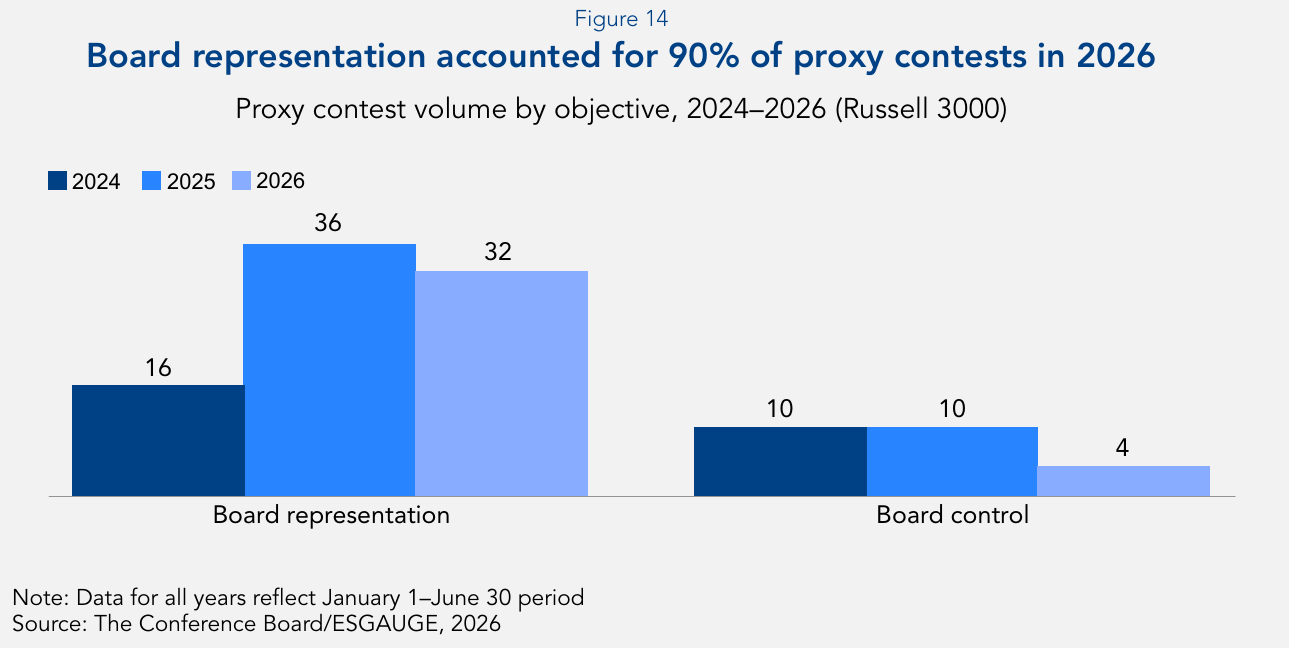
The composition of proxy contest demands continued its multiyear shift toward partial board representation and away from full board control: 32 of 36 contests (89%) sought board representation, compared to 78% in 2025 and 62% in 2024. Board control contests fell to just four (11%).
The shift toward board representation contests—now nearly 9 in 10 of all proxy fights—suggests that activists increasingly seek targeted changes in board composition rather than full control. Boards may wish to establish clear internal protocols for responding to activist approaches, including criteria for evaluating potential nominees and circumstances in which settlement may be preferable to a contested vote. Early engagement with major shareholders can also help boards assess investor sentiment before a contest escalates.
Looking Ahead: Preparing for 2027
With shareholder proposal volume declining and the regulatory framework in flux, the offseason presents an important window for boards and management teams to recalibrate their engagement strategies. The SEC staff’s withdrawal from substantive review for most Rule 14a-8 exclusion requests, increasingly contextual proxy voting policies, and greater variation in large asset-manager stewardship approaches have reduced predictability and placed more weight on direct, well-prepared investor dialogue. Companies that communicate proactively, document engagement carefully, and align governance and compensation practices with evolving investor expectations will be best positioned to navigate the 2027 proxy season effectively.
To prepare, boards and governance teams should consider the following priorities:
- Reassess exclusion strategy: With substantive staff concurrence no longer available for most Rule 14a-8 exclusion grounds, omission decisions require a well-documented legal rationale and greater awareness of potential litigation risk. Early engagement with proponents may reduce the likelihood of escalation or litigation.
- Map the shareholder base carefully: As voting decision-making becomes more fragmented across pass-through voting programs, custom policies, and institution-specific stewardship approaches, companies should not assume that institutional investors hold a uniform view. Understanding the current voting policies and engagement priorities of major shareholders is increasingly important.
- Strengthen nominating and governance committee disclosure: The comparatively lower support received by nominating and governance committee chairs is consistent with continued investor attention to board composition, refreshment, qualifications, tenure, and director overboarding. Companies should assess whether proxy disclosures explain the committee’s approach clearly and provide sufficient context for its decisions.
- Treat the 70–90% say-on-pay support zone as an engagement signal: Companies in this range should consider proactive outreach before the next proxy season, supported by a clear explanation of the compensation committee’s rationale for significant awards, discretionary adjustments, or changes to performance metrics.
- Maintain year-round activism preparedness: Proxy fights accounted for a multiyear-high share of a substantially smaller activism campaign universe in 2026, while exempt solicitations declined. Boards should regularly monitor ownership changes, public activist activity, and investor feedback and maintain clear internal protocols for evaluating activist approaches and potential nominees.
- Monitor the Regulation S-K reform process: The SEC chair has directed the Division of Corporation Finance to conduct a comprehensive review of Regulation S-K, with a focus on materiality and reducing immaterial or duplicative disclosure. Boards should monitor the review and assess the clarity and decision-usefulness of existing disclosures while continuing to comply fully with current requirements.
This article is based on corporate disclosure data from The Conference Board Benchmarking platform, powered by ESGAUGE.