
 Print
Print E-Mail
Zally Ahmadi is Managing Director, Governance Advisory at D.F. King. This post is based on her D.F. King memorandum.
This post is the first part of D.F. King’s 2026 Proxy Season debriefing report.
Shareholder Proposals
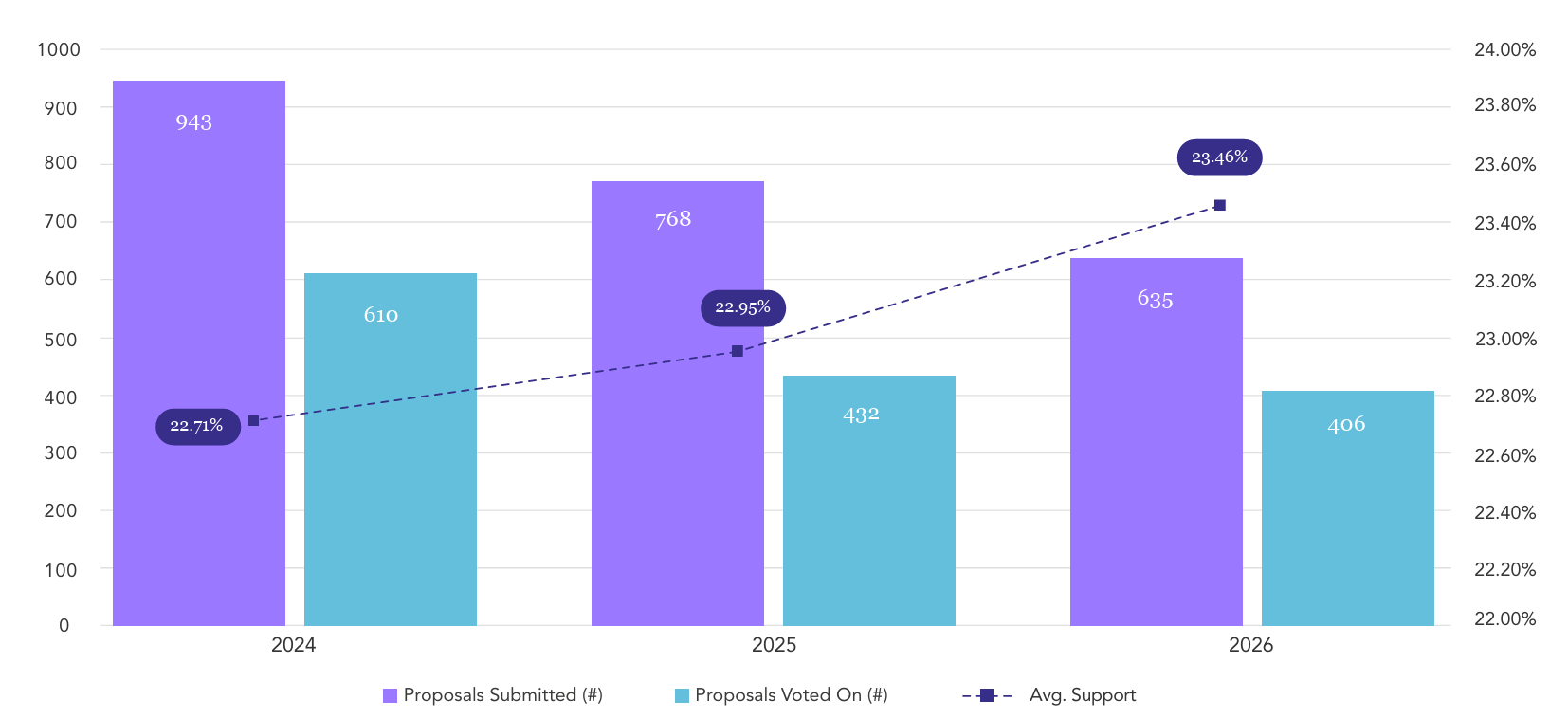
Proposals submissions on the decline, support remains steady.
- Total number of proposals filed in 2026 is down nearly 25% from 2025 and is at the lowest level we have seen over the past decade.
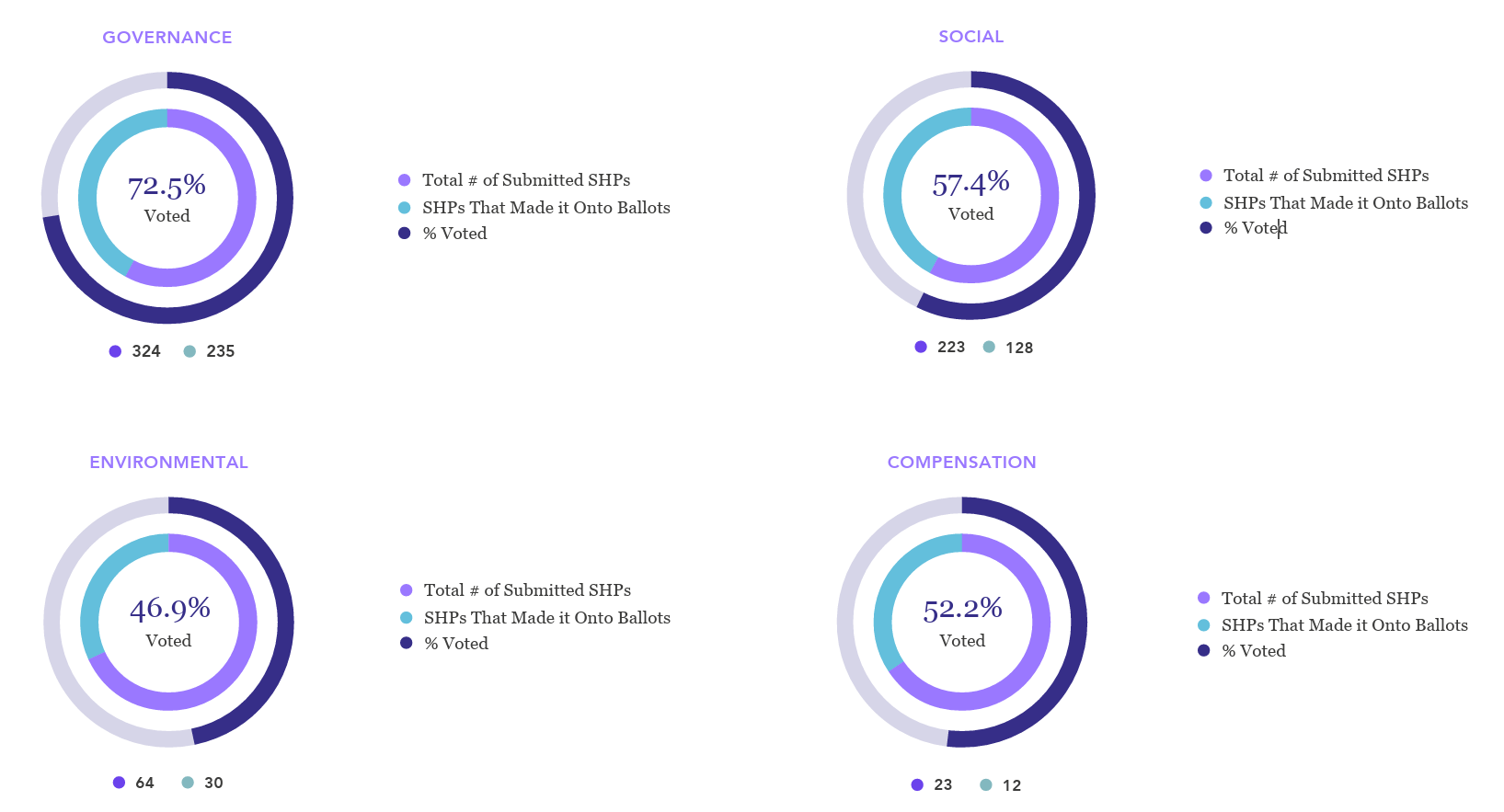
- Governance proposal numbers surged, while Environmental, Social and Compensation-related proposals saw decreased numbers across the board.
- Majority of top shareholder proposal types submitted experienced steady, if not increased, support levels.
Takeaways from each umbrella category:

Although total submissions declined, more proposals ended up being on ballots than originally estimated as most companies ultimately made conservative exclusion decisions in light of the SEC’s updated no-action process for the 2026 proxy season.
Submitted vs. Voted, Year-Over-Year Trends*
*Jan-June 30
Submitted vs. Voted, by Proposal Category
Top Submitted Proposals 2026*
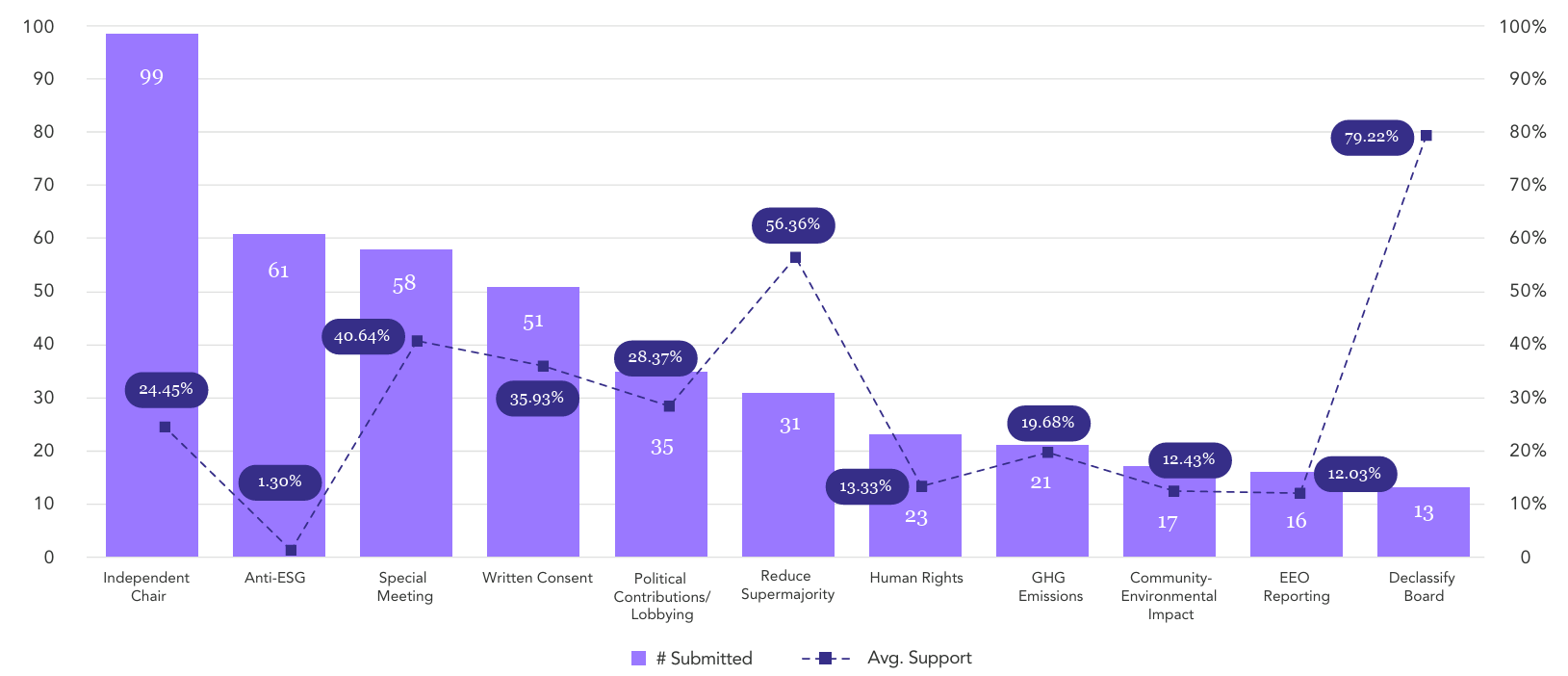
*Most common shareholder proposals submitted for 2026 meetings
Top Proposals that Made it onto Ballots 2026*
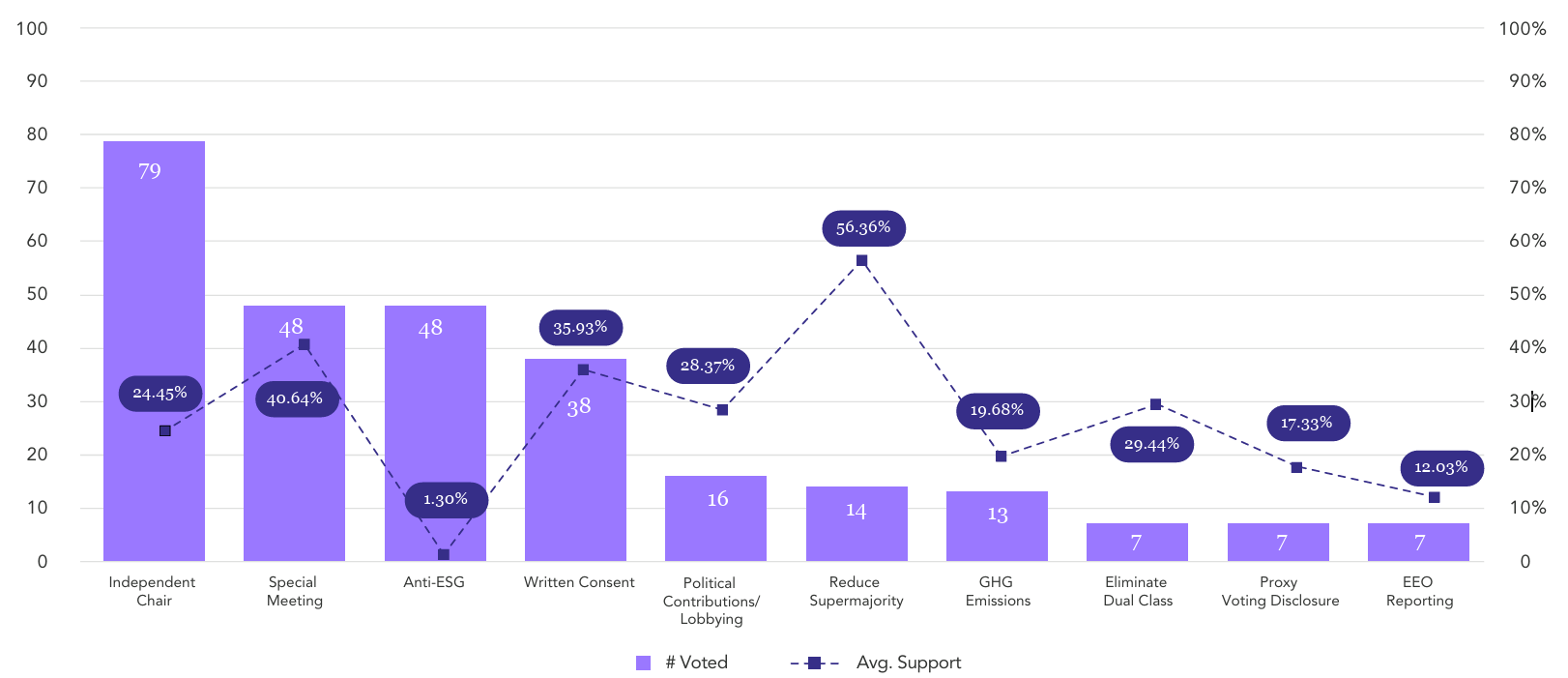
*Most common proposals on ballots for 2026 meetings
Environmental Initiatives
Fewer proposals but stronger support.
Takeaways:
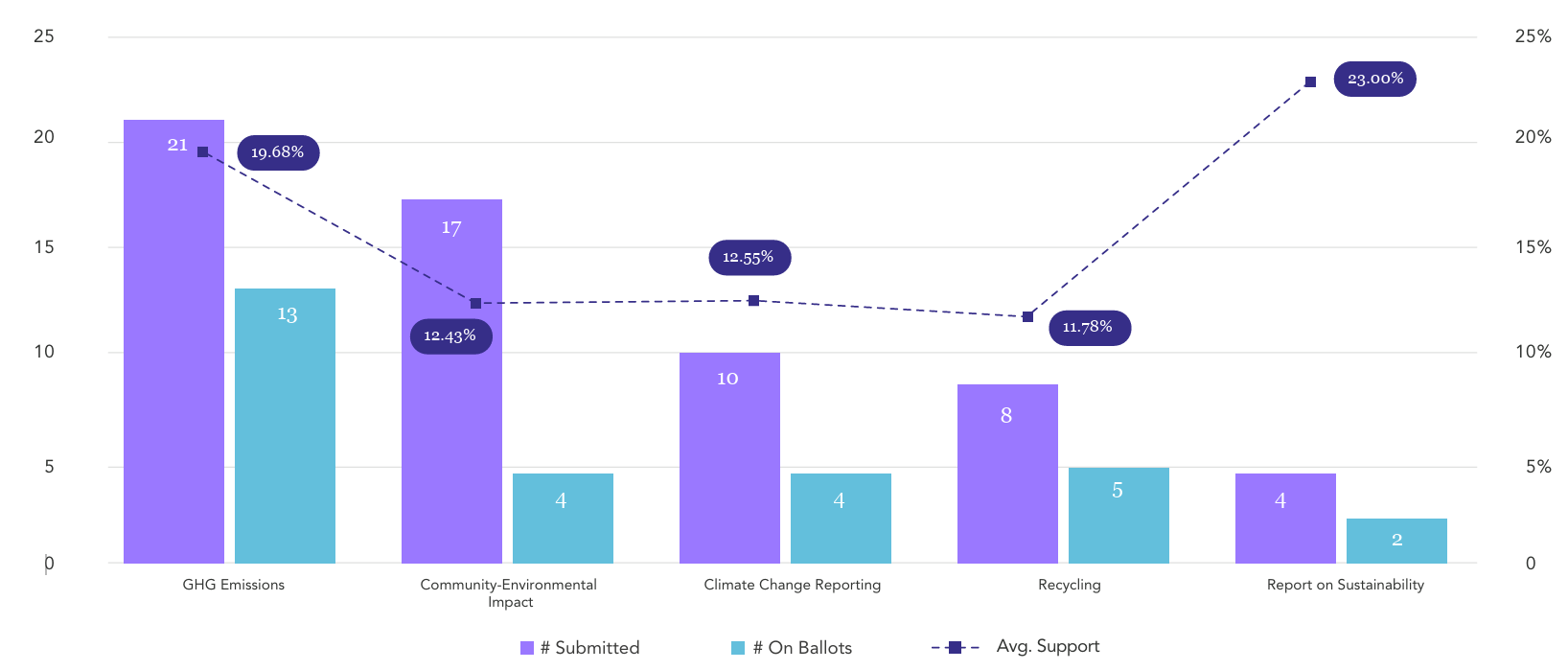
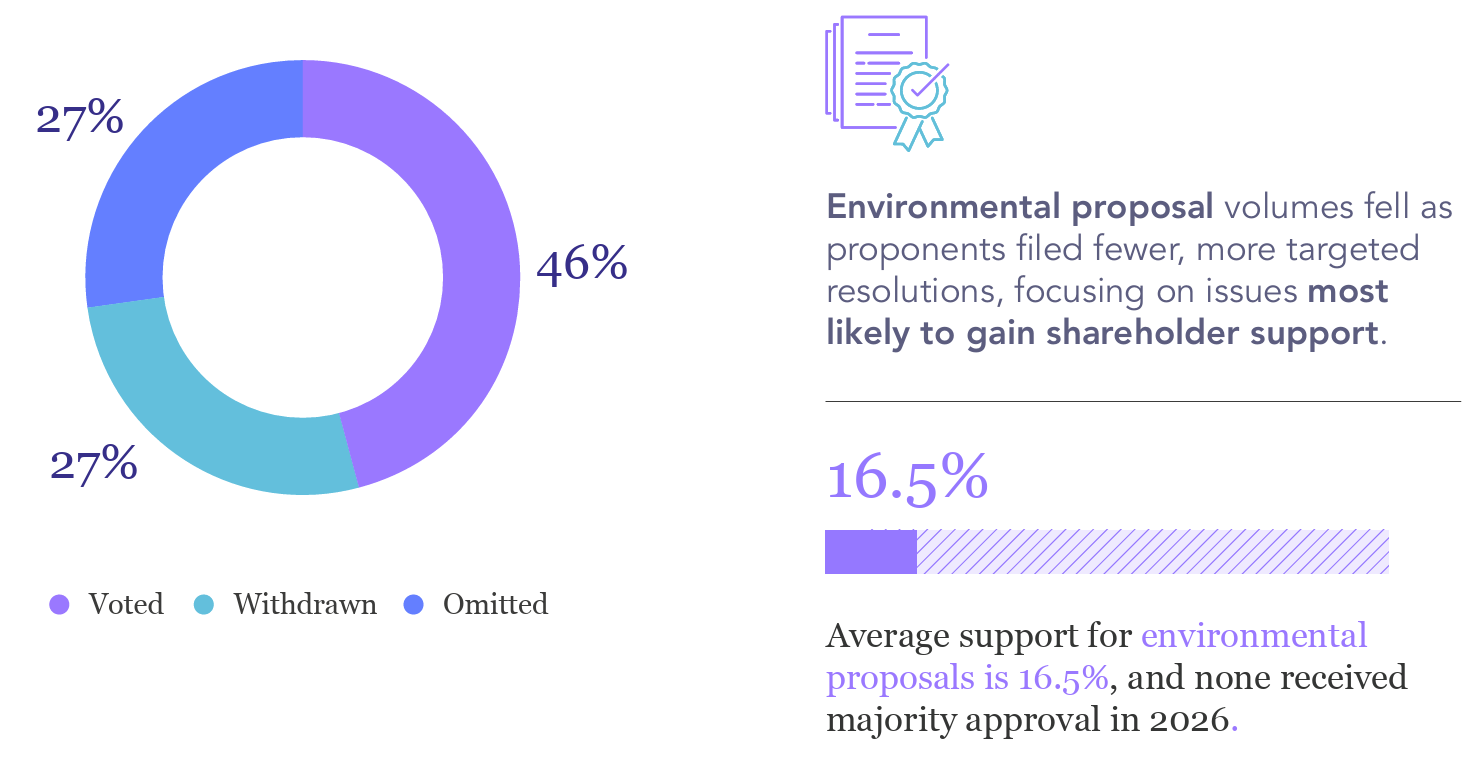
- Although zero environmental proposals passed this year, average support increased by 33% to a total of 16.5%. This is in stark contrast to just five years ago, when nearly half of all environmental proposals submitted received majority shareholder support.
- In addition to a variety of requests related to climate-related topics, proposals in this category also covered plastic use, food waste, deforestation, water supply and the impact on biodiversity.
- GHG emissions-related proposals remain the most popular proposal. Despite decreased numbers, average support for this proposal type increased by 50%.
- Proposals within the ‘community-environmental impact’ category maintain second place in total environmental proposal submissions this year – these proposals typically request information about how a company’s operations affect surrounding communities from an environmental standpoint.
- The same four proponents were filers or co-filers of at least 80% of environmental proposals that made it onto ballots: Amalgamated Bank, As You Sow, Green Century Capital Management and Trillium Asset Management.
Top Environmental Proposals
2026 Environmental Proposal Status
Social Initiatives
Although fewer proposals, support remains steady.
Takeaways:
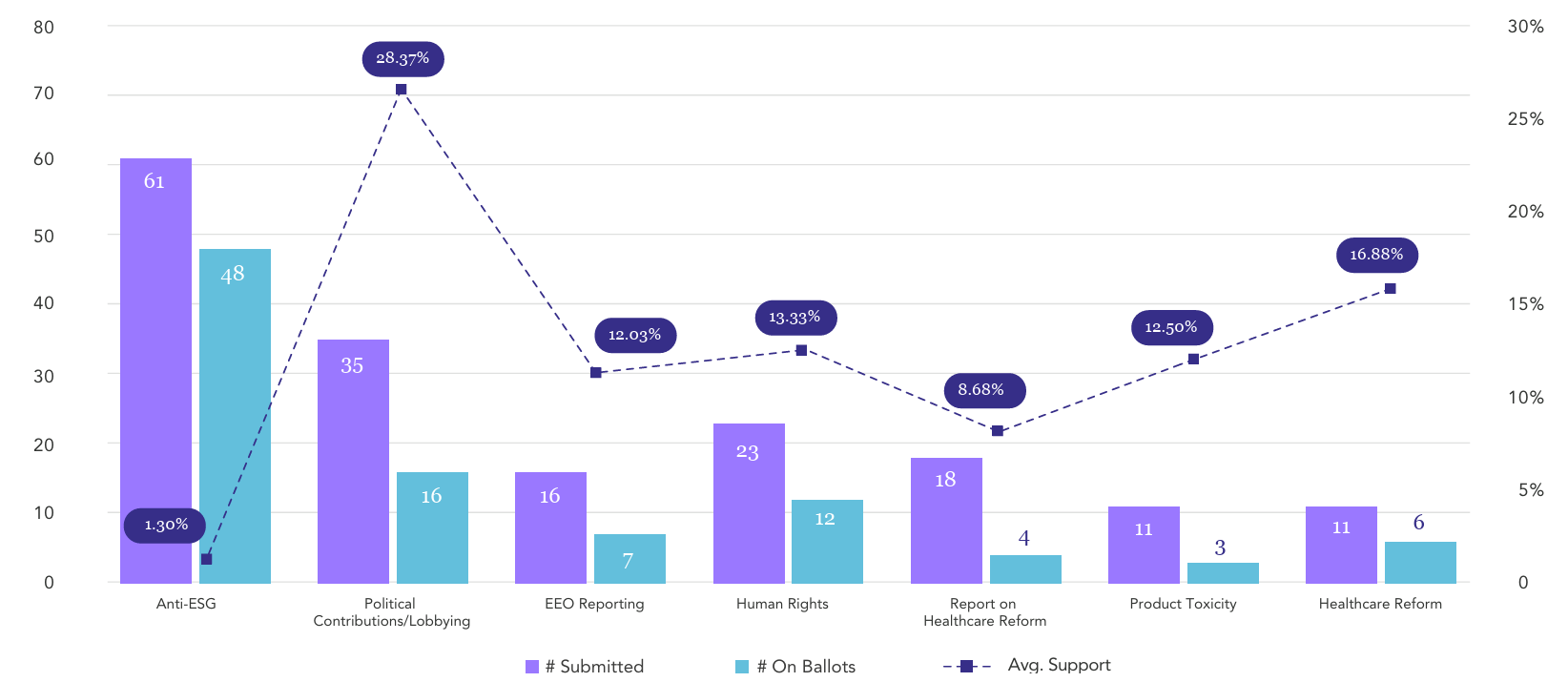
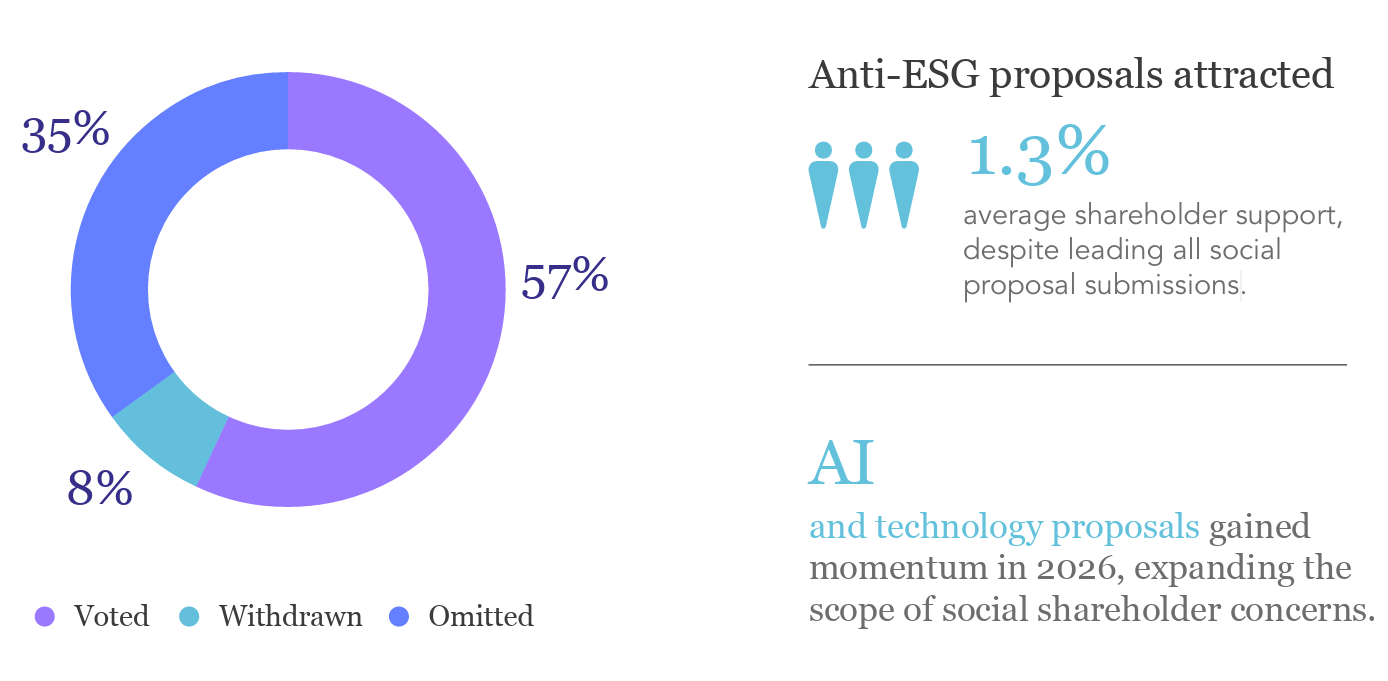
- ‘Anti-ESG’ proposal submissions remain the most popular proposal type submitted, though submissions for this type of proposal reduced by nearly one-third. Support remains quite low at an average of 1.3%. These proposals serve as ESG ‘counter-proposals’; requests include companies provide reporting on ROI tied to DEI initiatives, reporting on ROI tied to sustainability initiatives and reporting on the risks of using ESG metrics in executive compensation.
- Political contributions and lobbying-related proposals remain a key interest; this category represents the only type of social proposal that reached support levels in the 40th percentile.
- Human rights-related proposals remain a popular umbrella category, and this year included topics such as reporting on a human rights impact assessment, reporting on human rights due diligence processes, adopting policies on the provision of services in conflict zones and indigenous peoples’ rights.
- Technology and AI-related proposals topics continue to emerge, and in 2026 these included requests such as reporting on the risks of unethical use of external data in AI development and reporting on methods to eliminate bias inAI models.
Top Social Proposals
2026 Social Proposal Status
Governance Initiatives
Proposal numbers surged, support remains high.
Takeaways:
- Though the number of submissions increased by nearly 50%, the number of proposals that received majority support nearly halved.
- Retail proponents such as Mr. John Chevedden were responsible for at least two-thirds of governance proposal submissions.
- Proposals requesting independent chair and written consent rights noticeably jumped in submissions numbers. Independent chair proposal submission levels came in at over three times the volume saw in 2025, and written consent proposals increased by over four times the amount received in 2025 on this topic.
- Proposal topics included classics such as reducing supermajority provisions, special meeting thresholds, board declassification, written consent, separation of chair and CEO, recapitalization to one-vote-per-share, and the adoption of director resignation policies.
Top Governance Proposals

Governance Proposals that Received Majority Support

2026 Governance Proposal Status

Say-On-Pay & Equity Plans
Support remained high for both Say-on-Pay and equity plan proposals, and the number of ‘failures’ for Say-on-Pay decreased dramatically.
Takeaways:
- Say-on-Pay ‘failures’ reduced by nearly 60% from 2025 levels, whereas average support for all Say-on-Pay proposals remained comparable to the previous year.
- Although equity plan support levels remain strong, average support is down slightly from the previous year. Just six companies failed to receive majority support for their omnibus plans this year, which is generally in line with historical data and trends.
- When comparing the average support levels found within the Russell 3000 index vs. the S&P 500 index, we found that average support for companies in the Russell 3000 is approximately 1% higher than the average support for companies in the S&P 500.
- ISS recommended against 11.2% of Say-on-Pay proposals this proxy season; for these proposals, support averaged approximately 20% lower than those where ISS recommended ‘for’.
- Approximately 23 compensation-related shareholder proposals were filed this proxy season, with 52% of these ending up on ballots.
- Proposals requesting shareholders submit severance agreements to a shareholder vote was not only the most common type of compensation-related proposal received, but they received the highest levels of shareholder support, and one passed. This was the only type of compensation-related shareholder proposal that received majority support in 2026.
- Sixty percent of compensation-related shareholder proposals that ended up on ballots were submitted by Mr. John Chevedden as the primary proponent. These proposals focused on topics such as severance agreements and share retention policies.
Say-On-Pay Failure Rate

Average Support (Say-On-Pay & Equity Plans)

The complete report, including its Appendix, is available here.

