Yearly Archives: 2021

Going Public Report: First Half 2021

Robert Freedman, Amanda Rose and Ran Ben-Tzur are partners at Fenwick & West LLP. This post is based on a Fenwick memorandum by Mr. Freedman, Ms. Rose, Mr. Ben-Tzur, and James D. Evans.

A Record-Breaking First Half of 2021

Technology and life sciences companies continued to go public at an extraordinary rate in the first half of 2021 via initial public offerings, de-SPAC mergers and direct listings.

IPOs

IPOs outpaced the second half of 2020, which was previously the most active six months for the space since we began tracking in 2012. In H1 2021, there were 76 technology and 66 life sciencescompany IPOs in the U.S., compared to 48 and 65 in the second half of 2020, respectively.

With 32 IPOs in Q1 and 44 in Q2, technology IPO momentum built throughout the first half of the year. Life sciences offerings increased slightly throughout the first half of the year, with 31 IPOs in Q1 and 35 in Q2, still by far exceeding H1 2020 and several prior years’ offerings.

Mega offerings marked the first half of the year, with 17 companies raising proceeds of more than $1 billion, including one life sciences IPO. Technology IPOs saw deal sizes increase generally. Approximately 93% of IPOs raised more than $100 million in the first half of 2021, versus only 83% in
the second half of 2020. Almost 21% of tech IPOs raised more than $1 billion in H1, the same as the second half of 2020.

READ MORE »

Testimony By Chair Gensler Before the United States Senate Committee on Banking, Housing, and Urban Affairs

Gary Gensler is Chair of the U.S. Securities and Exchange Commission. This post is based on his testimony before the United States Senate Committee on Banking, Housing, and Urban Affairs. The views expressed in the post are those of Chair Gensler, and do not necessarily reflect those of the Securities and Exchange Commission or the Staff.

Good morning, Chairman Brown, Ranking Member Toomey, and members of the Committee. I’m honored to appear before you today for the first time as Chair of the Securities and Exchange Commission. I’d like to thank you for your support in my confirmation this spring. As is customary, I will note that my views are my own, and I am not speaking on behalf of my fellow Commissioners or the staff.

We are blessed with the largest, most sophisticated, and most innovative capital markets in the world. The U.S. capital markets represent 38 percent of the globe’s capital markets. [1] This exceeds even our impact on the world’s gross domestic product, where we hold a 24 percent share. [2]

Furthermore, companies and investors use our capital markets more than market participants in other economies do. For example, debt capital markets account for 80 percent of financing for non-financial corporations in the U.S. In the rest of the world, by contrast, nearly 80 percent of lending to such firms comes from banks. [3]

Our capital markets continue to support American competitiveness on the world stage because of the strong investor protections we offer.

READ MORE »

Market Efficiency and Limits to Arbitrage: Evidence from the Volkswagen Short Squeeze

Angel Tengulov is an assistant professor of finance at the University of Kansas School of Business. This post is based on a recent paper, forthcoming in the Journal of Financial Economics, by Mr. Tengulov; Franklin Allen, professor of finance and economics at Imperial College Business School; Eric Nowak, professor of financial management and accounting at Università della Svizzera italiana (USI) and Swiss Finance Institute (SFI); and independent researcher Marlene Haas PhD.

On October 26, 2008, Porsche announced a largely unexpected takeover plan for Volkswagen (VW). The resulting short squeeze in VW’s stock briefly made it the most valuable listed company in the world. In our paper, forthcoming in the Journal of Financial Economics, we argue that this was a manipulation designed to save Porsche from insolvency and the German laws against this kind of abuse were not effectively enforced. Using hand-collected data, our paper provides the first rigorous study of the Porsche-VW squeeze and shows that it significantly impeded market efficiency. Preventing this kind of manipulation in the European Union is important because without efficient securities markets, the EU’s major project of the Capital Markets Union cannot be successful.

At the height of the financial crisis on Monday, October 27, 2008, VW’s stock price rose dramatically and surged past EUR 1,005 per share on Tuesday, October 28, 2008, from a close the previous Friday of EUR 211 per share. This briefly made VW the most valuable listed company globally in terms of market capitalization. Our paper explores the degree to which this price increase was the result of an unexpected press release that Porsche Automobil Holding SE (Porsche SE or Porsche) made on Sunday, October 26, 2008. On the evening of this Sunday, Porsche announced a domination plan for VW. The rise in VW’s stock price caused a short squeeze and turned out to be very advantageous to Porsche. Using hand-collected data and information from court proceedings in Germany, the paper estimates that the rise in VW’s stock price resulted in a profit of at least EUR 6 billion and allowed Porsche to avoid bankruptcy.

READ MORE »

Uptick in Clients Seeking to Discuss ESG Investing

Greg Bawin is Executive Director, Joanna Kelley is Vice President, and Ashley Sauder is an Associate with ISS Market Intelligence (ISS MI), a unit of Institutional Shareholder Services Inc. (ISS). This post is based on their ISS report. Related research from the Program on Corporate Governance includes The Illusory Promise of Stakeholder Governance by Lucian A. Bebchuk and Roberto Tallarita (discussed on the Forum here); Companies Should Maximize Shareholder Welfare Not Market Value by Oliver Hart and Luigi Zingales (discussed on the Forum here); and Reconciling Fiduciary Duty and Social Conscience: The Law and Economics of ESG Investing by a Trustee by Max M. Schanzenbach and Robert H. Sitkoff (discussed on the Forum here).

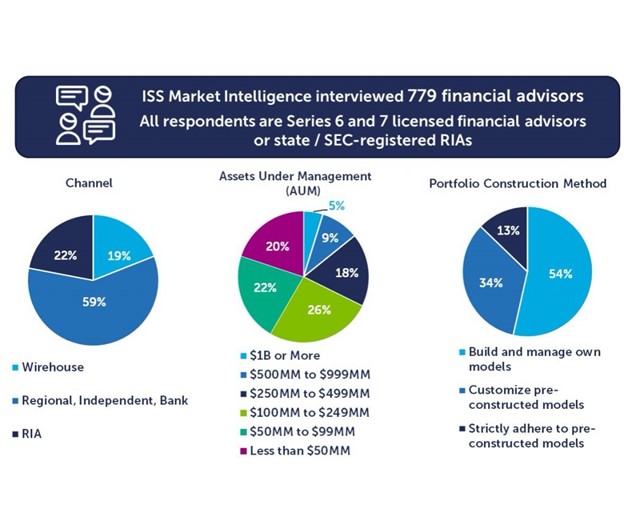
ESG is a popular topic within the investment community. ISS Market Intelligence conducted interviews with 779 financial advisors between July 27th and August 11th, 2021 in order to learn more about advisor perception and behavior when it comes to ESG investing. All respondents are Series 6 and 7 licensed financial advisors or state/SEC-registered RIAs and make up a significant cross-section of the intermediary-sold marketplace.

READ MORE »

ESG Disclosures in Proxy Statements: Benchmarking the Fortune 50

Rebecka Manis is an associate and Lindsey Smith and Sonia Gupta Barros are partners at Sidley Austin LLP. This post is based on a Sidley memorandum by Ms. Manis, Ms. Smith, Ms. Barros, Holly J. Gregory, Rebecca Grapsas, and Maureen Gorsen. Related research from the Program on Corporate Governance includes The Illusory Promise of Stakeholder Governance (discussed on the Forum here) and Will Corporations Deliver Value to All Stakeholders?, both by Lucian A. Bebchuk and Roberto Tallarita; For Whom Corporate Leaders Bargain by Lucian A. Bebchuk, Kobi Kastiel, and Roberto Tallarita (discussed on the Forum here); and Restoration: The Role Stakeholder Governance Must Play in Recreating a Fair and Sustainable American Economy—A Reply to Professor Rock by Leo E. Strine, Jr. (discussed on the Forum here).

It is no secret that the U.S. Securities and Exchange Commission (SEC) has recently ramped up its focus on environmental, social and governance (ESG) disclosures. In February 2021, Acting Chair of the SEC Allison Herren Lee directed the Division of Corporation Finance to enhance focus on climate-related disclosure in public company filings, including reviewing the extent to which public companies address the topics identified in the SEC’s 2010 Guidance Regarding Disclosure Related to Climate Change. Then, in March 2021, she requested public comment on climate change disclosures (which has generated over 600 comment letters, the vast majority of which are supportive of mandatory climate disclosure rules), and new SEC rules on climate risk and human capital disclosures are expected to be proposed yet this year. In addition, holding true to its “all-of-SEC” approach to ESG, the SEC has formed a Climate and ESG Task Force (composed of 22 members and led by the Acting Deputy Director of Enforcement), which will use data analytics to look for material gaps and misstatements in climate risk disclosures under existing rules.

READ MORE »

Beyond “Market Transparency”: Investor Disclosure and Corporate Governance

Alexander I. Platt is Associate Professor at the University of Kansas School of Law. This post is based on his recent paper, forthcoming in the Stanford Law Review. Related research from the Program on Corporate Governance includes The Law and Economics of Blockholder Disclosure by Lucian Bebchuk and Robert J. Jackson Jr. (discussed on the Forum here) and Pre-Disclosure Accumulations by Activist Investors: Evidence and Policy by Lucian Bebchuk, Alon Brav, Robert J. Jackson Jr., and Wei Jiang.

The ability to identify a firm’s shareholders is essential to modern corporate governance practice. Corporate managers, activist hedge funds, shareholder proposal sponsors, and other market actors all use this information in their efforts to shape corporate action.

This information—the identities of a company’s investors—seems elementary, if not downright primitive. In today’s world of algorithmic traders, machine learning, and robo-advisors, a list of a company’s shareholders doesn’t exactly get the blood pumping. It’s easy to see how it could come to be taken for granted.

And so it has. The best—and, in many cases, the only—source for information about a firm’s shareholders is produced under a mostly forgotten provision of the federal securities laws. For 40+ years, institutional investors (like mutual funds and hedge funds) have been disclosing their equity portfolio holdings every quarter as required under Exchange Act § 13(f) and the SEC’s rules promulgated under that statute (hereinafter collectively: 13F). And yet, the possibility that 13F plays a role in activism or other corporate governance interactions has been almost completely overlooked. Although countless studies in law and finance rely on 13F disclosures, none have turned the microscope around to examine the program itself. Accounts of the federal regulations that mediate the relationship between investors and corporations uniformly omit 13F.

READ MORE »

The FCA and SEC Annual Reports—A Statistical Comparison

Helen Marshall and Michael A. Asaro are partners and Joe Hewton is counsel at Akin, Gump, Strauss, Hauer & Feld LLP. This post is based on an Akin Gump memorandum by Ms. Marshall, Mr. Asaro, Mr. Hewton, Phil Davies, Peter Altman, and Emily Hansen.

Key Points

  • The SEC and the FCA each publish annual reports on their enforcement actions.
  • Whilst enforcement data only shows a snapshot of the regulators’ activities, there is much to be learned from these reports, particularly as it can help to identify trends, themes and priorities in the regulators’ approach to enforcement.
  • As well as the number of cases brought and their subject matter, the data also provides an insight on the average length of time it is taking the regulators to conduct investigations through to their resolution.
  • Compared to the previous year, the most recent full SEC figures show the Commission having brought fewer cases in 2020, but yet imposed a similar quantum of financial penalties, and indeed the SEC increased the amount of disgorgement sought to a new high. The FCA’s recently published figures show general stability year-on-year in the number of investigations resolved, and a slight decrease in the quantum of financial penalties imposed.
  • Given that the coronavirus pandemic is likely to have pushed back the resolution of cases, and potentially delayed the opening of investigations as well, the expectation is that the results in 2021/2022—and likely for the next few years, given that most investigations are multiyear affairs—will be higher, and 2020 will be looked back on as something of an anomaly.

READ MORE »

Discharging the Discharge for Value Defense

Eric Talley is the Isidor & Seville Sulzbacher Professor of Law at Columbia Law School. This post is based on his recent paper.

For those seeking watershed moments in contemporary contract law, the area of corporate debt seems an unlikely target. Though gargantuan in size, debt markets have a storied reputation as a refuge for the risk averse—participants expecting stable payouts, low volatility, and few surprises. Nevertheless, corporate debt contracts are themselves notably lengthy and complex. When parlayed with the immense financial sums at stake, that complexity can become a recipe for calamity. And in late 2020, calamity struck in the form of a nearly $1 billion accidental payoff sent to Revlon Inc.’s distressed creditorsnot by Revlon itself but rather by Citibank, the administrative agent for the loan. When several lenders refused to return the cash, Citibank commenced what many reckoned would be a successful (if embarrassing) lawsuit to claw it back. But in a dramatic 2021 opinion, a New York federal court sided with the debtholders, applying an obscure equitable doctrine known as the “Discharge for Value” defense. The lenders could keep their wayward windfall, and Citibank got stuck with a sizeable write-down. The decision is currently on appeal to the Second Circuit; but whatever its ultimate resolution, the case seems destined to feature prominently in contracts classes and textbooks for years to come.

READ MORE »

Boeing’s MAX Woes Reach the Boardroom

Edward D. Herlihy and William Savitt are partners at Wachtell, Lipton, Rosen & Katz. This post is based on their Wachtell memorandum, and is part of the Delaware law series; links to other posts in the series are available here. Related research from the Program on Corporate Governance includes Monetary Liability for Breach of the Duty of Care? by Holger Spamann (discussed on the Forum here).

In an important decision this week, the Delaware Court of Chancery permitted a Caremark duty-of-oversight claim to proceed against the directors of the Boeing Company. Stockholder plaintiffs sued Boeing’s board, seeking to recover costs and economic losses associated with the crash of two 737 MAX jetliners. The plaintiffs’ complaint alleged that the directors failed to monitor aircraft safety before the crashes and then failed to respond to known safety risks after the first crash. The lawsuit seeks to hold the directors liable for the resulting loss of “billions of dollars in value.”

The court denied the directors’ motion to dismiss. The court first concluded that the pleaded facts described a board that “complete[ly] fail[ed] to establish a reporting system for airplane safety.” Emphasizing that meeting minutes gave little sign of director engagement with safety issues, the court credited allegations that the board had no committee charged with direct responsibility to monitor airplane safety, seldom discussed safety, and had no protocols requiring management to apprise the board of safety issues.

READ MORE »

Boards Need to Become More Diverse. Here’s How to Do It

Maria Castañón Moats is Leader at the Governance Insights Center, PricewaterhouseCoopers LLP. This post is based on her PwC memorandum. Related research from the Program on Corporate Governance includes Politics and Gender in the Executive Suite by Alma Cohen, Moshe Hazan, and David Weiss (discussed on the Forum here).

When the SEC approved Nasdaq’s new board diversity rules earlier this month, it was yet another sign that the time has come to open public company boardrooms to directors with a broader set of backgrounds, experiences, and identities. Now more than ever, diversity on corporate boards is a business imperative.

Even when change is necessary, it often isn’t easy. Many boards are likely asking themselves where to begin. At PwC, we’ve been talking about the need for increased boardroom diversity for years, why it’s important, and how to get there. Our own board is more diverse than ever. And from our perspective, the time for all businesses to act is now.

One important reason for taking action is that the pressure on companies that lag behind on board diversity will likely only rise from here. Nasdaq’s rule will require companies listed on its exchange to add diverse directors or explain why they haven’t. Other stakeholders’ expectations are rising as well.

Several states have passed legislation mandating that businesses headquartered within them disclose board diversity data. California has gone further, enacting laws that require public companies based there to have a certain number of directors who are women or identify as Black, Latinx, Asian, Pacific Islander, Native American, Native Hawaiian, or Alaska Native, or as lesbian, gay, bisexual, or transgender.

READ MORE »

Page 27 of 90
1 17 18 19 20 21 22 23 24 25 26 27 28 29 30 31 32 33 34 35 36 37 90