Yearly Archives: 2022

Board Dialogue on DEI

Margaret Hylas and Olivia Tay are senior consultants at Semler Brossy. This post is based on their Semler Brossy memorandum. Related research from the Program on Corporate Governance includes Paying for Long-Term Performance by Lucian Bebchuk and Jesse Fried (discussed on the Forum here).

The drumbeat to add diversity, equity and inclusion (DEI) metrics to executive incentive design is growing louder. Some companies are already far along on their efforts, and incentive design may naturally extend their strategic priorities. Others are still learning, and the rush to add DEI incentives is at risk of being a “check the box” item that satisfies external audiences without meaning or impact internally. DEI incentive metrics do not unilaterally make sense for every company and are not the only lever companies can use to hold management teams accountable. How can a board member evaluate if DEI incentive metrics would be meaningful? As with any key initiative, the dialogue surrounding performance management can give clues as to what does or doesn’t make sense at a company.

Assessing the dialogue at the board level

You can tell a lot about how seriously a company takes an issue by how directors discuss it. DEI efforts are no exception. Before going straight to incentive pay, evaluate how board members assess performance management around DEI.

  • What information does the board receive on DEI? Is it primarily a report-out on key statistics, or does it go beyond the current state and include details on the company’s long-term strategy and goals?
  • Is the board aware of who leads the charge on the company’s DEI strategy? Can the board hear from those individuals and from diverse members of management?
  • Does the board have visibility on how key DEI statistics have progressed over time? Is the board aware of how progress compares to external and/or peer standards?
  • Are the definitions of success clear? Does the board know what the right goals should be? Is there sufficient room for board dialogue to test the rigor of goals?
  • Are the indicators of “something went wrong” clear to the board? For areas where the company misses the mark, is the board aware of the key drivers and needed course corrections?
  • Does the board discuss messaging and disclosure both internally and externally?
READ MORE »

The Activism Vulnerability Report Q3 2021

Jason Frankl and Brian Kushner are Senior Managing Directors at FTI Consulting. This post is based on their FTI Consulting memorandum. Related research from the Program on Corporate Governance includes The Long-Term Effects of Hedge Fund Activism by Lucian Bebchuk, Alon Brav, and Wei Jiang (discussed on the Forum here); Dancing with Activists by Lucian Bebchuk, Alon Brav, Wei Jiang, and Thomas Keusch (discussed on the Forum here); and Who Bleeds When the Wolves Bite? A Flesh-and-Blood Perspective on Hedge Fund Activism and Our Strange Corporate Governance System by Leo E. Strine, Jr. (discussed on the Forum here).

Intro and Market Update

Despite the continued fluctuation of COVID-19 cases and emergence of variants, the world does seem to be returning to some semblance of normalcy. Vaccinations and testing have allowed for increased travel and a return to the office for many, including FTI’s New York City colleagues. In addition, consumer spending increased by ~0.4% from Q2 to Q3 and we witnessed strong market performance from early-July to the beginning of September. [1] In recent months, the U.S. equity markets reverted back to the winners of the initial COVID era with large-cap equities outperforming both mid- and small-cap equities and growth equities outperforming value equities. [2] [3] While year-over-year inflation reached a 30-year high of 6.2% in October and supply chain disruption worries shook investor confidence, the major indices remained resilient through the third quarter, though they have come under pressure following the emergence of the Omicron variant. [4] [5] Year-to-date through November 30th, the S&P 500 Index had returned 21.6%, while the Nasdaq Composite Index and the Dow Jones Industrial Average had returned 20.6% and 12.7%, respectively. [6]

Corporate profits have been a key catalyst for the continued strength of the equity markets; the S&P 500 Index reported the third highest year-over-year growth in earnings since Q2 2010 at 41.6%, far above the pre-pandemic Q3 2019 growth rate of -2.2%. [7] Small-cap equities, measured by the Russell 2000 Index, also demonstrated earnings strength with forward EPS forecasts reaching five-year highs. [8]

READ MORE »

Are All Risks Created Equal? Rethinking the Distinction between Legal and Business Risk in Corporate Law

Gideon Parchomovsky is Wachtell, Lipton, Rosen & Katz Chair in Corporate Law at the Hebrew University of Jerusalem, and Adi Libson is a lecturer in the Law Faculty of Bar-Ilan University. This post is based on their recent paper.

Should corporate legal risk be treated similarly to corporate business risks? Currently, the law draws a clear-cut distinction between the two sources of risk, permitting the latter type of risk and banning the former. Business decisions, risky though they may be, fall under the duty of care and as long as they do not involve a conflict of interest, are judged under the deferential business judgment rule. Furthermore, companies can grant directors and officers exemptions from liability for negligent violations of the duty of care, as well as insure them against personal liability in such cases. Decisions that violate the law, by contrast, constitute a violation of the duty of loyalty (or an independent duty of good faith – Cede & Co. v. Techinicolor, Inc.), and hence, they are not entitled to the deferential standard of the business judgment rule. This distinction has been especially emphasized in the context of violations of oversight duty, willing to impose liability in case of the latter, but not in former (Chancellor Chandler in in re Citigroup; Pollman, 2019).

As a consequence of this distinction, corporate managements can take on high business risks, but must steer clear of decisions and policies that involve minimal legal risks, even when the potential rewards are very high. As a result, fiduciaries are shielded from personal liability in the case of business risk and are entirely exposed to civil and criminal liability that arises from legal risk taking. As corporate law theorists have underscored, the differential treatment of business and legal risk is highly problematic from the perspective of firms and shareholders (Bainbridge, 2008; Pollman, 2019). To begin with, legal risk cannot be completely averted or eliminated. More importantly, decisions involving negligible levels of legal risk might yield significant profits for firms. Thus, the outright ban on legal risk-taking harms shareholders, who would have favored a more nuanced regime to legal risk. From the shareholder point of view, there is no justification to differentiate between two similar patterns of risk, with up sides and down sides with the same magnitude and probabilities, based on the source of risk. Shareholders should be agnostic to the source of risk in of itself.

READ MORE »

Enron’s Contribution to the Vitality of Corporate Compliance

Michael W. Peregrine is a partner at McDermott Will & Emery LLP. This post is based on his McDermott Will & Emery memorandum.

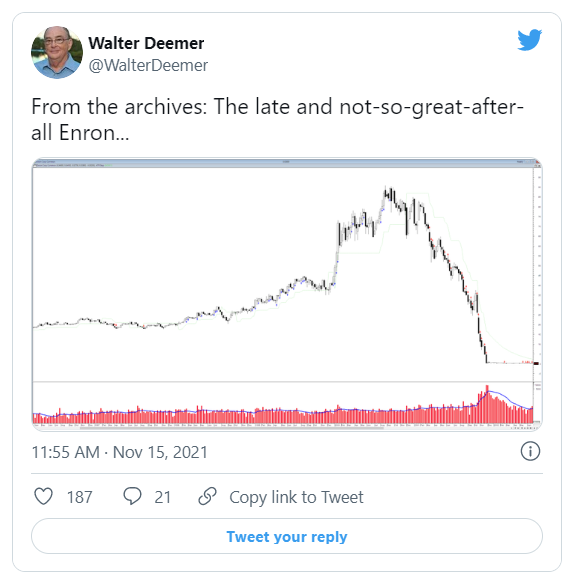
Enron shares hit $90.75 on August 23, 2001. By December 2, they had corrected to $0.26 and the business had filed for Chapter 11. Twenty years after the culmination of Enron’s too-close-to-the-sun flight, it’s clear its fallout set the course for the evolution of compliance in the new millennium.

The infamous Enron scandal of 2001 didn’t create the corporate compliance movement. Its roots go back many years, even past the seminal 1996 decision in the Caremark derivative litigation, that established board oversight responsibility for compliance. But Enron, with the sheer breadth of its audacity, gave compliance the vitality that led to its near—institutionalization in the Sarbanes—Oxley Act.

READ MORE »

SEC’s Focus on Advisory Fees—Implications for Private Fund Managers

Brian T. DalyJason M. Daniel, and Barbara Niederkofler are partners at Akin Gump Strauss Hauer & Feld LLP. This post is based on their Akin Gump memorandum.

Any doubts over whether the U.S. Securities and Exchange Commission considers advisory fees to be a focus area for 2022 were dispelled over the past several weeks. In four separate public statements, the SEC and the Staff of the Division of Examinations have set the stage for a comprehensive review of the “market” for advisory fees in a private funds context, as well as for a potentially intense review of how fees are disclosed, calculated, and assessed by private fund managers.

The Tone at the Top

The highest profile statement on advisory fees came from SEC Chairman Gary Gensler, who, in recent remarks at the Institutional Limited Partners Association Summit, [1] asserted that fees in the registered funds space have come down considerably since his time on Wall Street, while those in the private funds space have not dropped to the same degree—even as aggregate private fund assets have increased. Benchmarking off the “2-and-20 model,” the Chairman argued that advisory fees, when combined with fees for other services that private equity sponsors and other private fund managers may charge, are “pretty significant to our economy and our capital markets. Hundreds of billions of dollars in fees and expenses are standing between investors and businesses.” The Chairman announced that he has asked the SEC Staff, in an effort to stimulate “more competition” and “greater efficiencies” to the private funds space, to consider rulemaking recommendations aimed at “greater transparency to fee arrangements.”

READ MORE »

Page 89 of 89
1 79 80 81 82 83 84 85 86 87 88 89
