Yearly Archives: 2025

Finding an Alternative Disclosure Path: IPO Business Model Targets

Badryah Alhusaini is an Assistant Professor of Accounting at Arizona State University, Elizabeth Blankespoor is a Professor of Accounting at the University of Washington, Bradley Hendricks is an Associate Professor of Accounting at the University of North Carolina at Chapel Hill, and Gregory Miller is a Professor of Accounting at the University of Michigan. This post is based on their recent paper.

Key Observations

·         Nearly 40% of IPO firms provide quantitative forward-looking financial information in their IPO roadshows that is not included in the firm’s S-1 filings.

·         In contrast to seasoned public firms who generally provide next-year or next-quarter earnings forecasts, forward-looking metrics in the IPO roadshow – often called “targets” – most often describe the firm’s expected equilibrium business model at an unspecified time in the future.

·         Firms typically provide targets that improve their current financial position: increased profit ratios and reduced expense ratios.

·         Analyst forecasts are less dispersed for firms providing more targets, suggesting analyst use the targets. However, analysts’ forecasted values are generally more pessimistic than firm-provided targets, although analysts typically only forecast about 3 years ahead.

·         Firms frequently do not meet their disclosed targets. Even using the low-end of the target range, a minority of firms ever meet or exceed the target during any of their post-IPO years.

·         Stock returns increase (decrease) as firms’ realized profit (expense) margins grow relative to the IPO targets, suggesting that the targets were used to form expectations of firm value and investors adjust their estimates when realizations deviate from these expectations.

·         Firms that present targets during their IPO roadshow are nearly three times more likely to also issue next-year or next-quarter earnings forecasts after going public.

·         Firms do not continue to disclose targets after their IPO. Thus, target disclosure appears to be part of a broader strategy to provide investors with forward-looking information, with firms using the IPO roadshow as an initial platform before transitioning to more conventional guidance mechanisms once public.

The inclusion of forward-looking projections in Securities and Exchange Commission (“SEC”) filings has a long and varied history. Dating back to the Securities Act of 1933, the SEC initially prohibited the inclusion of such information in SEC filings. The SEC later reversed this prohibition through a series of regulations. Safe harbor rules released in 1979 (Rule 175 under the Securities Act of 1933 and Rule 3b-6 under the Securities Exchange Act of 1934) attempted to insulate financial projections from liability. Then, US Congress adopted the Private Securities Litigation Reform Act (PSLRA) in 1995 that, among other things, provided firms more protection when making forward-looking statements in an effort to reassure firms nervous about litigation risk.

However, IPO communications are explicitly excluded from PSLRA protections. Thus, issuers are exposed to significant liability if forward-looking statements prove inaccurate, and lawyers strongly caution firms against providing such information while marketing the IPO. Although IPO firms are technically allowed to provide forecasts when going public, Rose (2021) writes that issuers “uniformly choose not to.” In a review of IPO filings over the prior three years, Feldman (2021) similarly concludes that “no IPO company has actually provided financial projections, other than vague narrative disclosure.” In contrast, Coates (2023) raises the possibility that firms do provide such information, but through the roadshow presentation rather than in the SEC filing. In light of the debate, and motivated by increased discussion about IPO disclosure rules, we ask whether IPO firms use the roadshow as an alternative disclosure channel to meet the market demand for forward-looking information.

READ MORE »

Top 10 Corporate Sustainability Priorities for 2025

Andrew Jones is a principal researcher at The Conference Board Governance & Sustainability Center. This post is based on his Conference Board memorandum.

In 2025, corporate sustainability leaders are adapting to shifting policy environments and stakeholder demands while broadening their focus to emerging priorities like biodiversity, water availability, AI, and business integration. This report outlines the top 10 sustainability priorities for the remainder of the year based on analysis of current data, executive insights, and emerging trends.

Top 10 Corporate Sustainability Priorities for 2025

10. AI: AI offers sustainability gains but raises potential environmental, social & governance (ESG) risks.

9. Sustainability storytelling: Beyond core disclosure, effective storytelling can engage diverse audiences and advance goals.

8. Business integration: The embedding of ESG into core functions is uneven but increasingly urgent.

7. Biodiversity: Nature risks are rising; disclosures are growing but measurement remains complex.

6. Water stewardship: Water stress is accelerating local risk strategies and reporting.

5. Supply chain transparency: Due diligence laws and reputational risk are driving deeper supplier scrutiny.

4. Climate strategy: Companies are deepening climate disclosure and aligning capital with risk, despite the evolving policy environment.

3. Return on investment (ROI): Internal expectations are rising to show the business case for sustainability investments.

2. ESG reporting regulations: Mandatory disclosure rules are expanding but increasingly fragmented across jurisdictions. READ MORE »

Board Effectiveness: A Survey of the C-Suite

Paul DeNicola is a Principal, and Arielle Berlin and Carin Robinson are Directors at PricewaterhouseCoopers (PwC). This post is based on a PwC and The Conference Board report by Mr. DeNicola, Ms. Berlin, Ms. Robinson, and Matteo Tonello.

We are living through a period of historic change — one marked by rapid shifts in policy, global alliances and market dynamics. For business leaders in 2025, the challenges are real, and the uncertainty is undeniable. But this volatility and uncertainty also presents a powerful opportunity: to reimagine strategies, build greater resilience and uncover new avenues for growth.

The fast-moving legal and regulatory environment, while complex, is reshaping the corporate governance landscape in ways that require fresh thinking and bold leadership. Policy changes and evolving international relationships are driving companies to adapt quickly — rethinking supply chains, adjusting to tariff changes and navigating shifting consumer behaviors. And although declining consumer confidence has made planning more difficult, it also underscores the need for agile strategies and strong, steady leadership.

In this environment, boards play a critical role — not only in providing oversight, but in helping companies find clarity and direction amid the noise. Expectations of boards are rising fast, as is the need for directors to bring both vision and versatility to the table.

Are boards meeting these expectations? In some ways, yes. As the fifth annual Board Effectiveness: A Survey of the C-Suite from PwC and The Conference Board shows, more executives are expressing confidence in their boards. Progress is clear — but so are the opportunities for enhancement. Directors are being called upon to expand their remit, refresh their skill sets and align more closely with the operational realities executives face.

This year’s survey — capturing insights from more than 500 executives — reveals a landscape of both momentum and challenge. Encouragingly, 35% of executives now say their boards are doing an excellent or good job, up from 30% the prior year. At the same time, concerns remain about board composition, preparedness for global complexity and the evolving boundaries of board oversight. READ MORE »

Mass Corporate Governance

Caleb N. Griffin is an associate professor at the University of North Carolina School of Law. This post is based on his article forthcoming in the Washington University Law Review.

Under the classic corporate governance framework, informed shareholders vote their own shares. However, this framework is increasingly a relic of a different era. Today, most investors hold equity assets indirectly through a variety of intermediary agents. As a result, the classic framework has been replaced in large part by a new model of intermediation.

Intermediation involves the decoupling of financial and voting rights, which weakens incentives to invest in informed governance. Regulators “solved” the problem of weak intermediary incentives by imposing an effective voting mandate—today, intermediaries face significant pressure to vote their shares even when such voting is not intrinsically valuable. As a result of the effective regulatory obligation to vote and weak financial incentives to vote well, intermediaries have developed a privately optimal strategy of high-volume, low-value, non-firm-specific, and compliance-oriented governance activity, which this article terms “mass corporate governance.”

Mass corporate governance generates a number of problems for investors, the corporate governance system, and the broader economy. Indeed, the scale of the problem has led some scholars to question whether certain intermediaries should vote at all, or, more modestly, to consider how such governance authority should be constrained.

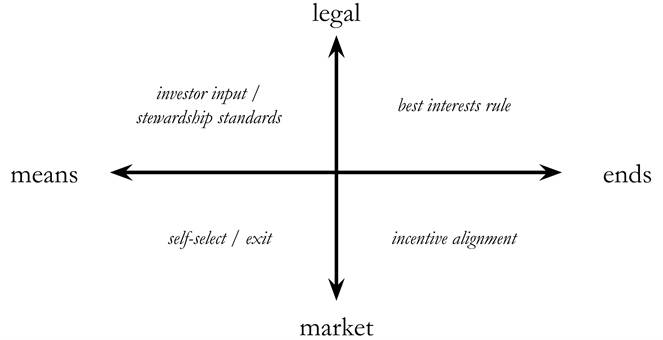
In a forthcoming paper, I construct a framework categorizing possible constraints on intermediary governance. This framework classifies potential constraints by their reliance on either legal or market forces and their target of either the means or ends of intermediated governance. Strategies to constrain governance costs can be situated in one of four quadrants, as shown in the figure below. Possible constraints in each quadrant will be discussed in turn.

Figure I: Theoretical Constraints on Intermediated Governance

READ MORE »

AI Can Draft Board Minutes—But Should It? Considerations for Public Companies

Charu A. Chandrasekhar, Avi Gesser, and Eric T. Juergens are partners at Debevoise & Plimpton LLP. This post is based on a Debevoise & Plimpton memorandum by Ms. Chandrasekhar, Mr. Gesser, Mr. Juergens, Matthew E. Kaplan, Kristin A. Snyder, and Amy Pereira.

The proliferation of AI recording, transcription, and summarization features within video conferencing platforms (“AI meeting tools”) has led many public companies to consider adopting AI meeting tools to assist with the drafting of board and committee meeting minutes. While AI meeting tools offer several practical benefits, evaluating the potential risks associated with the use of these features is crucial from a risk oversight, governance, and controls perspective.

Debevoise’s Capital Markets, White Collar and Regulatory Defense, and Data Strategy and Security Practices will be holding a webinar on July 29, 2025 at 12:00pm ET to discuss best practices and risk considerations for public companies considering the adoption of AI meeting tools.

Key Considerations. Below we outline certain important considerations that should be top-of-mind for public companies that are considering the use of these types of AI applications in board and committee meetings.

  • Confidentiality and Cybersecurity. Companies using AI meeting tools should confirm with the AI provider that: (i) company data will remain confidential and will not be used to train any AI model; (ii) humans at the AI provider will not have access to company data; (iii) the AI provider will not share company data with any other third parties absent specifically agreed extraordinary circumstances; and (iv) the AI provider has an effective cybersecurity program reasonably designed to protect company data.

READ MORE »

Delaware Courts Continue to Reject Hypothetical, Unripe Bylaw Challenges

Charlotte K. Newell is a partner, and Ram Sachs is a managing associate at Sidley Austin. This post is based on a Sidley Austin memorandum by Ms. Newell and Mr. Sachs, and is part of the Delaware law series; links to other posts in the series are available here.


On April 14, 2025, the Court of Chancery issued a decision in Siegel v. Morris that reaffirms the limits of challenges to companies’ bylaws based on their language alone. This latest decision (pending appeal) will likely limit bylaw litigation to stockholder claims concerning any bylaw’s actual impact, rather than hypotheticals.


In June 2024, Siegel filed claims challenging the company’s amended advanced notice bylaw, which governs the timing and procedure for a stockholder to nominate a candidate for election as a director. Plaintiff initially argued that the bylaw was facially invalid, meaning that the plain language of the bylaw alone was subject to judicial review and should be held invalid.  This facial invalidity challenge differs from a so-called “as-applied” challenge, where a stockholder argues that a board has actually wielded a bylaw in an inequitable manner (e.g., by declaring the stockholder’s nomination notice invalid for failure to comply with an advance notice bylaw).

In July 2024 — just weeks after Siegel was filed — the Delaware Supreme Court issued its decision in Kellner (which we have discussed in prior publications). Kellner underscored the very narrow and high standard for a facial validity claim: a plaintiff must show that the challenged bylaw “cannot operate lawfully under any set of circumstances.” Siegel thereafter amended his complaint to disclaim a facial validity challenge, and attempted to fashion an as-applied challenge instead.

This amendment left plaintiff attempting to fit a square peg into a round hole. Siegel attempted to challenge the company’s advance notice bylaw despite (i) admittedly having no intention to nominate directors for election, nor (ii) identifying any other stockholder who had such intention. As the Court put it, “Plaintiff asks this Court to review the Advance Notice Bylaw now, even though no stockholder presently seeks to nominate a director for election….” It was, therefore, essentially a facial challenge in all but name. READ MORE »

SEC Considers Narrowing Foreign Private Issuer Definition

Helena Grannis, Jorge Juantorena, and Sebastian Sperber are partners at Cleary Gottlieb. This post is based on a Cleary Gottlieb memorandum prepared by Ms. Grannis, Mr. Juantorena, Mr. Sperber, and Katherine Hebb.

On June 4, 2025, the Securities and Exchange Commission (“SEC” or “Commission”) unanimously voted to publish a concept release[1] (the “Concept Release”) seeking public comment on issues related to the definition of a foreign private issuer (“FPI”).

The definition of an FPI is important to non-U.S. companies because it determines whether such companies can be listed within the United States while benefitting from a series of regulatory accommodations. These accommodations reduce the burden of certain SEC and exchange listing rules applicable to U.S. companies, facilitating non-U.S. companies’ access to the U.S. capital markets.

The Concept Release expresses concern that the current FPI definition allows certain non-U.S. entities to avoid effective regulatory oversight, potentially disadvantaging U.S. companies, FPIs subject to meaningful home country oversight and U.S. investors. The Commission is considering whether to narrow the eligibility criteria for FPIs in an effort to ensure that non-U.S. companies selling securities and listing in the United States are subject to meaningful regulatory requirements, either in their home jurisdictions or in the United States.

This alert memo provides an overview of the existing FPI regime, summarizes the key elements of the Concept Release and discusses potential implications for FPIs, investors and other interested parties.

The Existing FPI Framework

An FPI[2] is currently defined as an entity incorporated outside the United States unless:

  1. More than 50% of its outstanding voting securities are directly or indirectly owned by U.S. residents (referred to as the “shareholder test”); and
  2. Any of the following applies (referred to as the “business contacts test”):
    • The majority of its executive officers or directors are U.S. citizens or residents;
    • More than 50% of its assets are located in the United States; or
    • Its business is administered principally in the United States.

READ MORE »

Weekly Roundup: June 11-17, 2025


More from:

This roundup contains a collection of the posts published on the Forum during the week of June 11-17, 2025

A Time to Pivot: Four Ways US M&A Leaders Are Adapting to 2025 Conditions


The Costs of Weakening Shareholder Primacy: Evidence from a U.S. Quasi-Natural Experiment


Response to TX SB 2337


Corporate Balance in the Face of Accelerating Technological Change


2025 Shareholder Proposal Season: A First Glimpse at Key No-Action Request Results


Top Five Takeaways From the 2025 Proxy Season


Court Permits “Do-Over” for Non-Compliant Nomination Notice under Company’s Advance Notice Bylaw


Investment Stewardship Annual Report


Refocusing on Fundamentals Amidst Disruption and Divergence


Lone Star Governance: Recent Amendments to the Texas Corporate Statute


CEO Pay Trends: A Post Proxy Season Recap


Anti-ESG Shareholder Proposals in 2025


Fewer Campaigns, but Much to Observe from the 2025 Proxy Season


Shareholder Activism Developments in the 2025 Proxy Season


Disclosure Trends From the 2024 Reporting Season

Christine Mazor is a partner, and Doug Rand is a managing director at Deloitte LLP. This post is based on a Deloitte memorandum by Ms. Mazor, Mr. Rand, Megan D’Alessandro, Cody Yettaw, and Sam Paolini.

Background

The global business environment continues to undergo rapid transformation. In addition to regulatory changes, shifts in the macroeconomic and global trade landscape, and geopolitical tensions, generative artificial intelligence (AI) is continuing to transform the ways companies operate. In this complex and uncertain environment, clear financial reporting remains crucial in conveying to investors how companies navigate and are affected by broader global events and trends.
We have examined how Fortune 500 companies have addressed various disclosures in their latest annual reports in light of these evolving themes. This Financial Reporting Spotlight offers insights into how companies have approached those disclosures and examines the new segment disclosures required this year. While disclosures are most meaningful when tailored to a company’s specific facts and circumstances, understanding broader trends may be informative.

New Disclosure Requirements

Reportable Segment Disclosures

ASU 2023-07 [1] added the requirement for public entities to disclose, in the segment footnote, the expense categories and amounts of significant segment expenses that are regularly provided to the chief operating decision maker (CODM) and included in the segment measure(s) of profit and loss and certain other additional disclosures. The ASU became effective for all public entities for fiscal years beginning after December 15, 2023, and was adopted by calendar-year-end companies in their 2024 Form 10-K.[2]
Segment disclosures, including those on significant segment expenses, reflect how management views the business. Such disclosures are therefore based on a company’s unique facts and circumstances and will vary widely among registrants, even those in similar industries. Not surprisingly, companies have differed in both the number of significant segment expenses identified and the nature of those expenses.

READ MORE »

Comparison of Significant Sustainability-Related Reporting Requirements

Eric Knachel, Laura McCracken, and Kristen Sullivan are Partners at Deloitte LLP. This post is based on a Deloitte memorandum by Mr. Knachel, Ms. McCracken, Ms. Sullivan, Mark Strassler, Cody Yettaw, and David Wrobbel.

Background

After many years of voluntary reporting, various regulators and standard setters around the world have established requirements for disclosures of certain sustainability-related information. The most significant sustainability-related reporting regulations and standards are those established by the SEC and the state of California [1] in the United States, the European Union via the Corporate Sustainability Reporting Directive (CSRD), and the International Sustainability Standards Board (ISSB) within the IFRS Foundation. The landscape is evolving rapidly, as highlighted by the SEC’s recent withdrawal of its legal defense for its currently stayed climate rule and the European Commission’s (EC’s) proposed omnibus initiative that will delay and potentially modify certain reporting requirements of the CSRD and other E.U. sustainability reporting regulations.

READ MORE »

Page 37 of 75
1 27 28 29 30 31 32 33 34 35 36 37 38 39 40 41 42 43 44 45 46 47 75